Soy el gato al mando de esta página web. No se toma ninguna decisión sin mi supervisión. Me encargo de que cada detalle, desde el diseño de un post hasta las decisiones más trascendentales, esté cuidadosamente evaluado. Mi objetivo es asegurar que cada contenido refleje fielmente la esencia y los valores de nuestra revista.
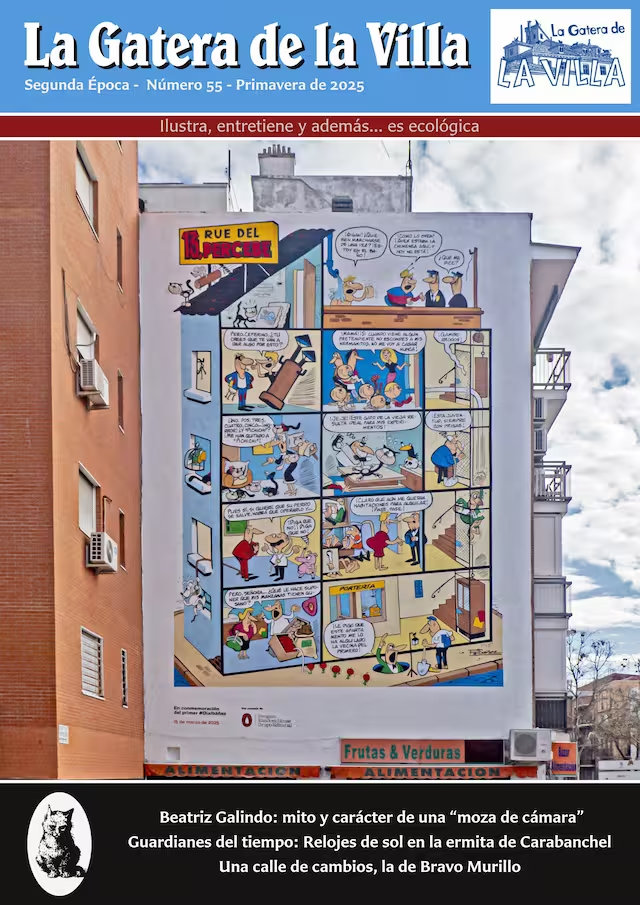
¿Alguna vez habéis imaginado a una moza de cámara casándose con el madrileño más destacado de su tiempo y convirtiéndose en una rica aristócrata de la corte de los Reyes Católicos? Pues, sorprendentemente, esa historia es real. Si queréis descubrir quién fue esta fascinante mujer y adentraros en su historia, no podéis perderos este número de La Gatera. Además, entre sus páginas encontraréis otros artículos igualmente interesantes, como, por ejemplo, los relojes de sol de la ermita de Carabanchel y la historia de una de las calles más emblemáticas de Madrid: Bravo Murillo. Y por si fuera poco, estrenamos nueva sección: el Gato escribano.
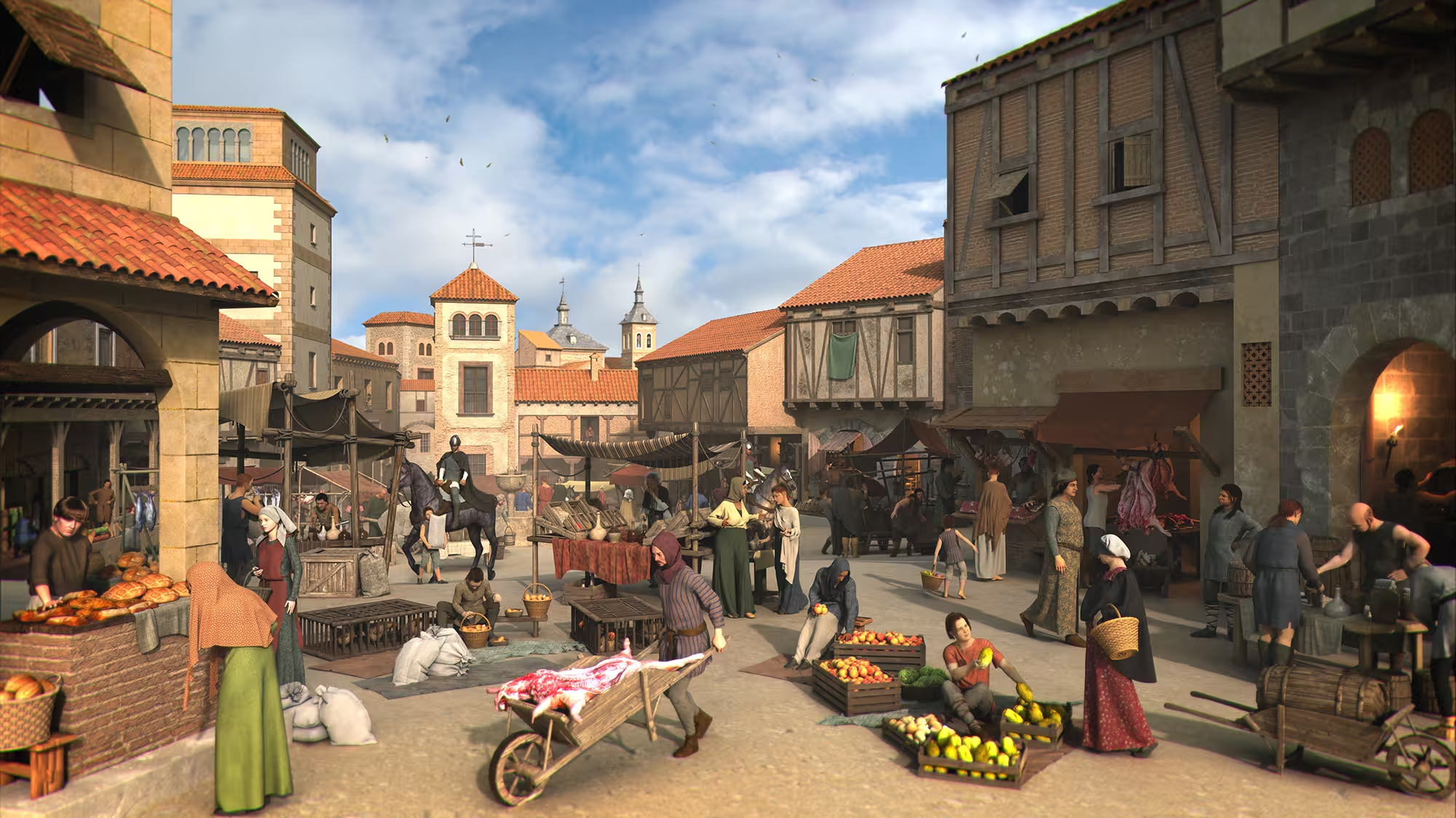
¿Te imaginas vivir en una ciudad donde no deja de llover durante más de dos meses? Aunque parezca el argumento de una novela apocalíptica, esto ocurrió realmente. El diluvio de 1434 en Madrid fue un evento climático extremo que puso en jaque la supervivencia de la población medieval y que fue documentado por cronistas como León Pinelo.
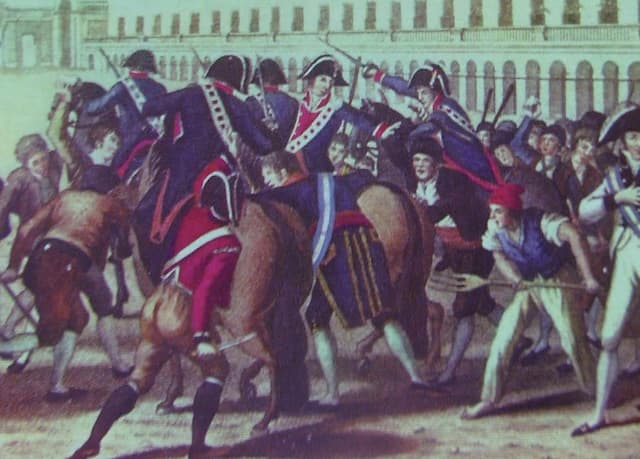
El Motín de Aranjuez, ocurrido entre el 17 y el 19 de marzo de 1808, es uno de esos episodios en la historia de España que marcan un antes y un después. Este levantamiento, que tuvo lugar en un contexto de crisis política y social durante el reinado de Carlos IV, no solo supuso un traspaso de la corona entre padre e hijo, sino que también marcó el inicio de una serie de acontecimientos que culminarían en la Guerra de Independencia Española.
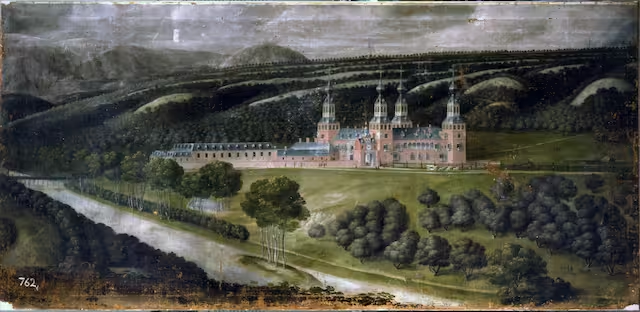
Located on the outskirts of Madrid, surrounded by the El Pardo forest from which it takes its name, this palace has served as a resting place for monarchs and as the setting for important political events. Today, it remains a significant symbol of the Spanish monarchy, in addition to housing a rich art collection and serving as a venue for official events.
The Origin of the Palacio de El Pardo
The history of the Palacio de El Pardo dates back to the 14th century, when the El Pardo forest was a popular hunting ground for Castilian monarchs. In 1405, Henry III ordered the construction of a royal house or small castle on this site, which Emperor Charles V replaced with a newly built palace between 1540 and 1558, designed by Luis de Vega, in the form of a square alcázar, with towers at the corners and surrounded by a moat. Philip II beautified it between 1563 and 1568 in the Italian style, with stuccoes, murals, and portraits of the royal family, mostly works by prestigious painters such as Becerra, Titian, Antonio Moro, and Sánchez Coello.
The palace still retains the moat of the late medieval castle on which it stands.
Photograph by Esetena. Source: Wikipedia
The 1604 Fire and Its Impact on the Palace
The 1604 fire was a disaster for Spanish artistic heritage. The flames destroyed almost five hundred valuable works, including paintings and other culturally significant pieces. Despite the magnitude of the tragedy, some works managed to survive the flames, most notably Titian’s painting Jupiter and Antiope—also known as the Venus of El Pardo—which was a huge relief for Philip III. «If that painting survived, nothing else matters,» the monarch is said to have commented upon hearing the news of the tragic event.
«Júpiter and Antíope», Titian. Louvre Musem
After the fire, in which only the southwest tower survived, the palace was rebuilt by architect Francisco de Mora. After his death, his nephew Juan Gómez de Mora continued the work, completing the construction under the reign of Philip IV.
Subsequent Transformations and the 20th Century
Over the centuries, the Palacio de El Pardo underwent various transformations, constantly adapting to the new demands of each historical period. During the reign of Philip V, the monarch, drawn to the rugged character and serenity of the El Pardo natural surroundings, decided to make it the main residence of the court during the winter months and had the Royal Chapel built, integrated into the Palace. This choice reflected not only the desire to escape the bustle of the capital but also an eagerness to find in El Pardo a more intimate and suitable refuge for the cold seasons.
Philip V’s son, Charles III, was also deeply attracted to El Pardo, and his appreciation for the palace was such that he reestablished it as the main residence of the court during the winter. Under his reign, El Pardo underwent one of its most notable architectural transformations, with a significant extension that added a wing to the east, resulting in a new main façade facing south, along with a central courtyard that reorganized the vast space created.
Palacio de El Pardo, patio de los Borbones. Source: Madridiario
The palace suffered significant damage during the Civil War, but after the conflict ended, it was restored and adapted to serve as the residence of the Head of State, Francisco Franco, who lived there from 1940 to 1975.
Legacy and Current Status of the Palacio de El Pardo
Today, the Palacio de El Pardo continues to be a prominent historical symbol of Spain. After Franco’s death, it was incorporated into the national heritage and opened to the public. Visitors can admire its valuable collection of paintings and tapestries from the 16th and 18th centuries, which decorate its walls, as well as the elegant furniture that accompanies it.
Interior of the Palacio de El Pardo.Source: Patrimonio Nacional
Its rich history, marked by the 1604 fire and subsequent transformations, makes the Palacio de El Pardo a testament to the political, cultural, and artistic changes in Spain over the centuries.
Websites Consulted Museo del Pardo: Entry on the Palacio de El Pardo COAM: Entry on the Palacio de El Pardo
El Palacio de El Pardo se encuentra situado en las afueras de Madrid, rodeado por un bosque del que toma su nombre. A lo largo de la historia este palacio ha servido como lugar de descanso para los monarcas y como escenario de importantes eventos políticos. En la actualidad sigue siendo un importante símbolo de la monarquía española, además de albergar una rica colección de arte y servir como sede de eventos oficiales.
Para ofrecer las mejores experiencias, utilizamos tecnologías como las cookies para almacenar y/o acceder a la información del dispositivo. El consentimiento de estas tecnologías nos permitirá procesar datos como el comportamiento de navegación o las identificaciones únicas en este sitio. No consentir o retirar el consentimiento, puede afectar negativamente a ciertas características y funciones.
Funcional
Siempre activo
El almacenamiento o acceso técnico es estrictamente necesario para el propósito legítimo de permitir el uso de un servicio específico explícitamente solicitado por el abonado o usuario, o con el único propósito de llevar a cabo la transmisión de una comunicación a través de una red de comunicaciones electrónicas.
Preferencias
El almacenamiento o acceso técnico es necesario para la finalidad legítima de almacenar preferencias no solicitadas por el abonado o usuario.
Estadísticas
El almacenamiento o acceso técnico que es utilizado exclusivamente con fines estadísticos.El almacenamiento o acceso técnico que se utiliza exclusivamente con fines estadísticos anónimos. Sin un requerimiento, el cumplimiento voluntario por parte de tu proveedor de servicios de Internet, o los registros adicionales de un tercero, la información almacenada o recuperada sólo para este propósito no se puede utilizar para identificarte.
Marketing
El almacenamiento o acceso técnico es necesario para crear perfiles de usuario para enviar publicidad, o para rastrear al usuario en una web o en varias web con fines de marketing similares.