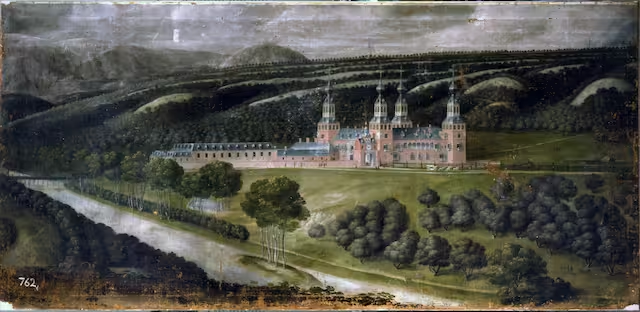
On the outskirts of Madrid, where a centuries-old holm oak forest dampens the noise of the city, stands the Palacio de El Pardo —a medieval hunting ground, royal residence, setting for weddings, concordats, and deathbeds, and for nearly four decades the place from which Francisco Franco ruled Spain—. Today it is managed by Patrimonio Nacional and can be visited, although it remains a venue for state receptions; do not think for a moment that they cast the Crown aside at the first opportunity.
El origen del Palacio de El Pardo
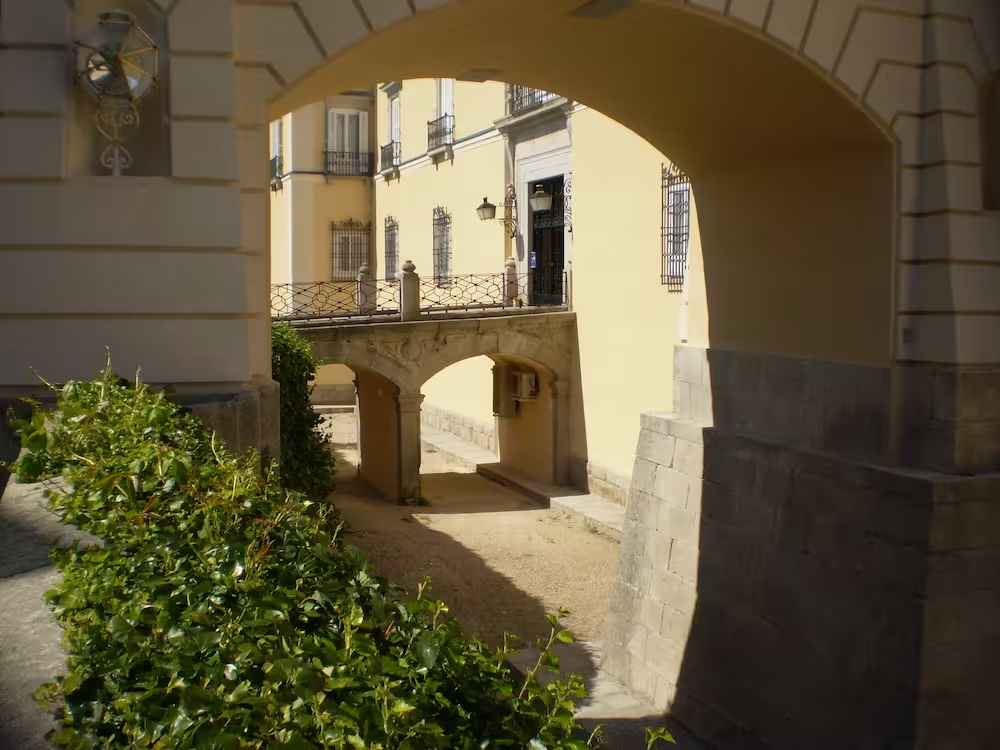
The history of the Palacio de El Pardo dates back to the 14th century, when the Mount of El Pardo was a favorite hunting ground for Castilian monarchs —as already mentioned in Alfonso XI’s Libro de la Montería, a king who knew a thing or two about hunting grounds—. In 1405, Enrique III ordered the construction of a royal house here, upon which Enrique IV later built a small castle; Carlos V replaced it with a newly designed palace between 1544 and 1558, created by Luis de Vega in the shape of a square alcázar, complete with corner towers and a perimeter moat —just in case any disgruntled courtier decided to show up unannounced—. Felipe II enriched it between 1563 and 1568 in the Italian style —stuccoes, wall paintings, and royal family portraits, mostly by Tiziano, Antonio Moro, and Sánchez Coello— turning it into one of the most remarkable decorative ensembles of the Hispanic monarchy.
El incendio de 1604
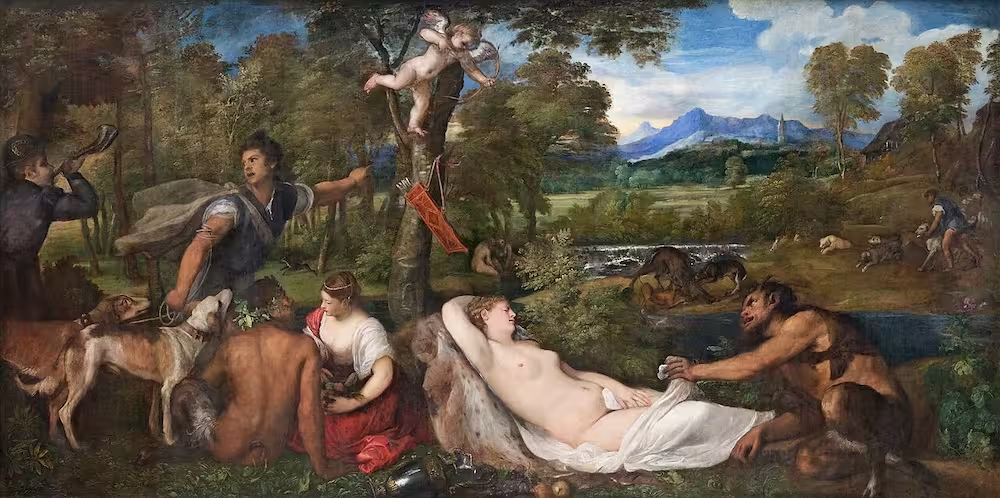
All that splendor was lost in a matter of hours. The fire of March 3, 1604, destroyed nearly five hundred artworks —paintings, devotional objects, and pieces of all kinds—, with barely the «aposento de la camarera» being saved, where one can still see the ceiling featuring the Historia de Perseo by Becerra. The celebrated Júpiter y Antíope by Tiziano, known at the time as «la Venus del Pardo,» also escaped the flames —although history later led it to the Museo del Louvre, where it can be admired today—. Its rescue brought such joy to Felipe III that, as the story goes, he declared that since that work had been saved, the rest did not matter to him.
Felipe III commissioned Francisco de Mora to rebuild the palace, and Eugenio and Patricio Cajés, Vicente Carducho, Luis de Carvajal, and Jerónimo Cabrera to create the frescoes that were to restore the splendor lost in the fire. He also commissioned his court painter, Juan Pantoja de la Cruz, to produce a series of royal family portraits. Upon De Mora’s death, the reconstruction was completed by his nephew Juan Gómez de Mora, by then during the reign of Felipe IV.
Los Borbones: tapices, Sabatini y Goya
The 17th-century Austrias accumulated nearly three hundred paintings at El Pardo —many with Flemish themes, copies of Tiziano, and portraits of the Habsburgs—. The palace must have felt cluttered and outdated to the taste of the first Bourbon, as Felipe V ordered all those paintings removed and the walls covered with tapestries from the Real Fábrica he had just founded in Madrid. Furthermore, his architect Francisco Carlier divided some of the large halls into smaller rooms to accommodate the entire royal family, sacrificing part of the fresco paintings in the process —the price to pay for having more children than square meters—.
Carlos III, who also chose El Pardo as the court’s winter residence —from Epiphany to Holy Week—, commissioned Francisco Sabatini to expand the palace by building a new wing, a twin to the old one, and joining both via a central block; the result practically doubled the surface area and gave the building a new main facade facing south.
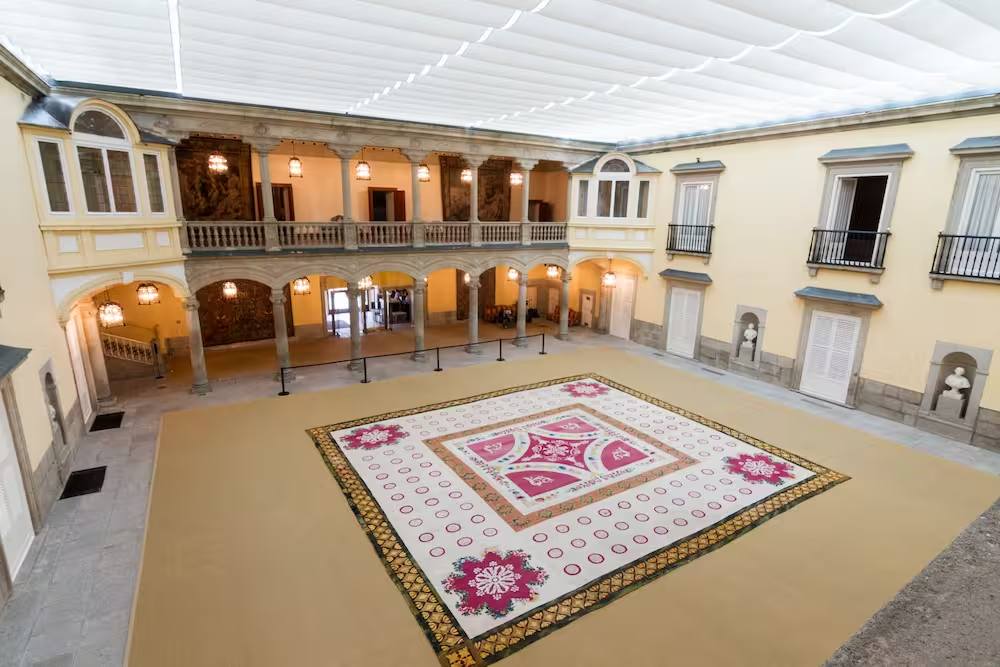
To decorate the new rooms —intended for the Princes of Asturias and their children—, Carlos III commissioned tapestries from the Real Fábrica starting in 1775, distributing the preparatory cartoons among various court painters. It was in this context that a young Francisco de Goya painted some of his most famous works today: La cometa, El quitasol, La maja y los embozados, El cacharrero, or La feria de Madrid —cartoons meant for the bedroom and chambers of the Prince of Asturias that are now exhibited at the Museo del Prado—. The death of Carlos III interrupted the program just as it was reaching full perfection. Although tradition says that María Luisa was bored to tears at El Pardo, Carlos IV maintained the custom of visiting the palace in winter due to his fondness for hunting. The passing of the 19th and 20th centuries eventually diluted that splendid collection, dispersing a large part of the tapestries to other Sitios Reales, such as El Escorial or the Palacio Real de Madrid, far from the walls for which many of those works were originally conceived.
El siglo XX y la actualidad
The palace remained within the Republican zone throughout the entire war and temporarily served as headquarters for the forces defending the sector, but it did not suffer direct bombings or destruction to its main structure, meaning the damage was moderate —something that cannot be said for so many other Madrid buildings of the era—.
Restored at the end of the conflict, it became the official residence of Francisco Franco, who lived there from 1940 until his death in November 1975, longer than any monarch who had occupied it before. From El Pardo, the major diplomatic decisions of the regime were made or prepared: the Concordat with the Holy See and the cooperation agreement with the United States, both from 1953, which opened Spain to the Western world after post-war isolation. In 1972, the wedding of his granddaughter Carmen Martínez-Bordiú to Alfonso de Borbón was celebrated there. And it was there that Franco suffered the first episodes of the illness that took him to the Hospital La Paz, where he died on November 20, 1975.
Following his passing, the palace was incorporated into Patrimonio Nacional and opened to the public, who today can admire the tapestry collection that survived the successive dismantlements under Felipe V, Carlos IV, and Francoism itself, along with the accompanying furniture.
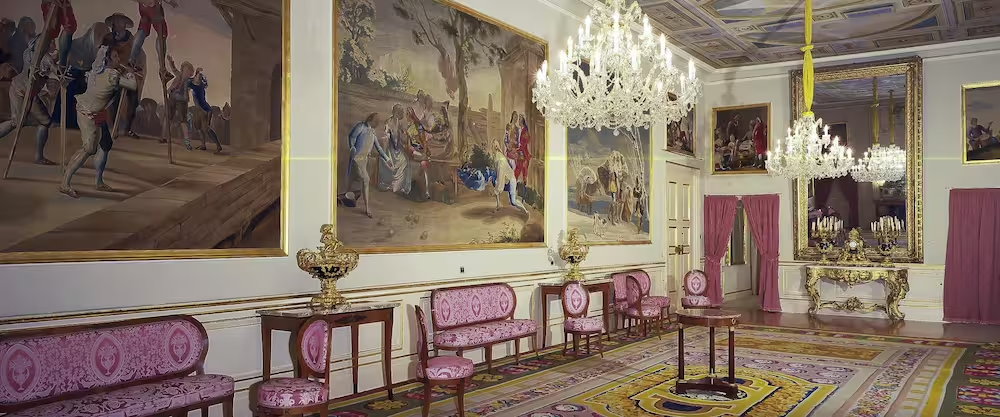
Its halls, decorated with tapestries and paintings that survived four centuries of royal moves, receive thousands of visitors every year —more than 36,500 visitors in 2024— while the surrounding forest maintains the very same calm it did over six hundred years ago.
Páginas web consultadas
- Patrimonio Nacional: el Palacio de El Pardo.
- COAM: Entrada sobre el Palacio de El Pardo.
- Museo del Prado: Palacio de El Pardo.

Soy el gato al mando de esta página web. No se toma ninguna decisión sin mi supervisión. Me encargo de que cada detalle, desde el diseño de un post hasta las decisiones más trascendentales, esté cuidadosamente evaluado. Mi objetivo es asegurar que cada contenido refleje fielmente la esencia y los valores de nuestra revista.