On the outskirts of Madrid, where the oak and holm oak forest that gives it its name muffles the noise of the city, stands the Palacio de El Pardo —a medieval hunting ground, royal residence, setting for weddings, concordats and deathbeds, and for nearly four decades the place from which Francisco Franco governed Spain—. Today it is administered by Patrimonio Nacional and is open to visitors, although it remains a venue for state receptions.
The Origins of the Palace of El Pardo
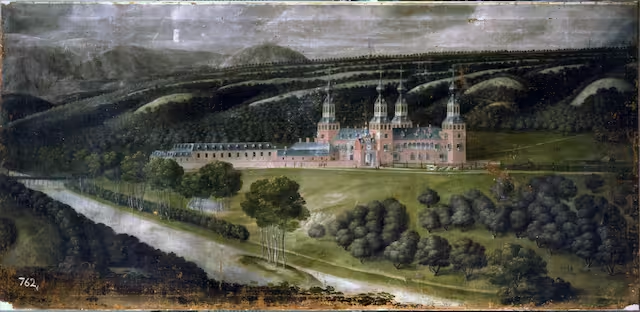
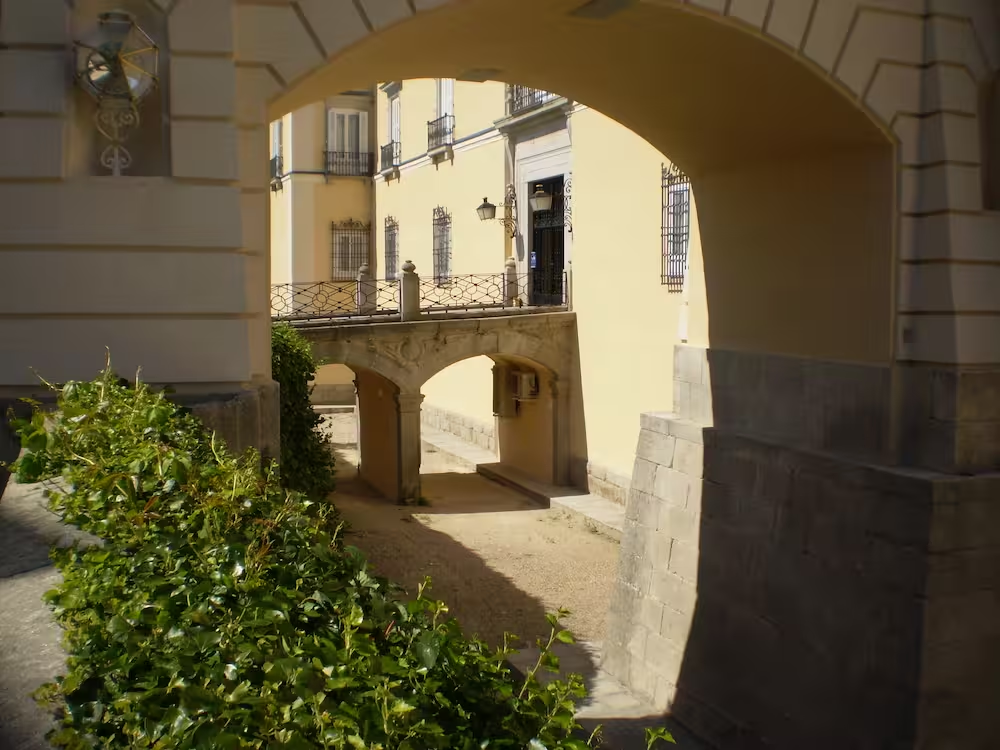
The history of the Palacio de El Pardo begins in the 14th century, when the Monte de El Pardo was the favourite hunting ground of the Castilian monarchs —it is already mentioned in the *Libro de la Montería* of Alfonso XI—. In 1405 Henry III ordered the construction of a royal house here, upon which Henry IV built a small castle. Charles V replaced it with a new palace between 1544 and 1558, designed by Luis de Vega in the form of a square alcázar with corner towers and a perimeter moat. Philip II enriched it between 1563 and 1568 in the Italian style —with stuccoes, mural paintings, and portraits of the royal family, mostly by Titian, Antonio Moro and Sánchez Coello— turning it into one of the most notable decorative ensembles of the Hispanic monarchy.
The Fire of 1604
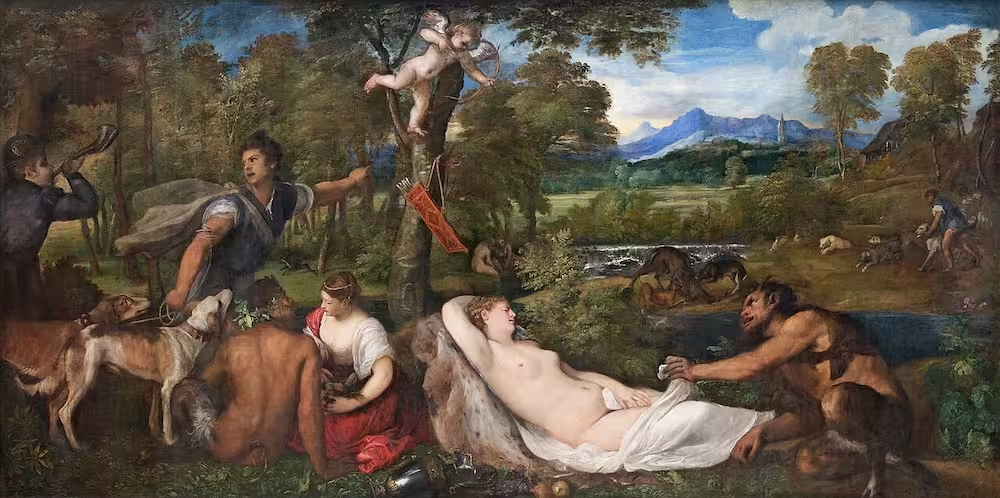
All that splendour was lost in a matter of hours. The fire of 13 March 1604 destroyed almost five hundred works —paintings, devotional objects, and pieces of all kinds—, with barely the “Lady-in-Waiting’s Apartment” surviving, where the ceiling with the Story of Perseus by Becerra can still be seen. Also saved from the flames —though history later took it to the Louvre Museum, where it can be admired today— was the famous Jupiter and Antiope by Titian, known at the time as “the Pardo Venus”. Its rescue brought such joy to Philip III that he is said to have declared that, since that work had been saved, nothing else mattered.
Philip III commissioned Francisco de Mora to rebuild the palace and hired a large team of painters —Eugenio and Patricio Cajés, Vicente Carducho, Luis de Carvajal, Jerónimo Cabrera— for a new fresco decoration. He also commissioned his court painter, Juan Pantoja de la Cruz, to paint a series of royal portraits of the family. After De Mora’s death, the reconstruction was completed by his nephew Juan Gómez de Mora, already during the reign of Philip IV. The 17th-century Habsburgs accumulated nearly three hundred paintings in El Pardo —many of Flemish themes, copies of Titian, and portraits of the Habsburgs— so that the palace must have seemed overloaded and old-fashioned to the taste of the first Bourbon.
The Bourbons: Tapestries, Sabatini and Goya
Philip V ordered the removal of all those paintings and covered the walls with tapestries from the Royal Factory he had just founded in Madrid. Two centuries of Habsburg collecting, relocated in favour of French fashion. His architect Francisco Carlier also divided some of the large halls into smaller rooms to accommodate the entire royal family, sacrificing part of the frescoes in the process.
Charles III, who also chose El Pardo as the winter residence of the court —from Epiphany to Holy Week—, commissioned Francisco Sabatini to extend the building by copying the existing structure and joining the two blocks —the old and the new— with a central section. The result practically doubled the surface area of the palace and created a new main façade facing south.
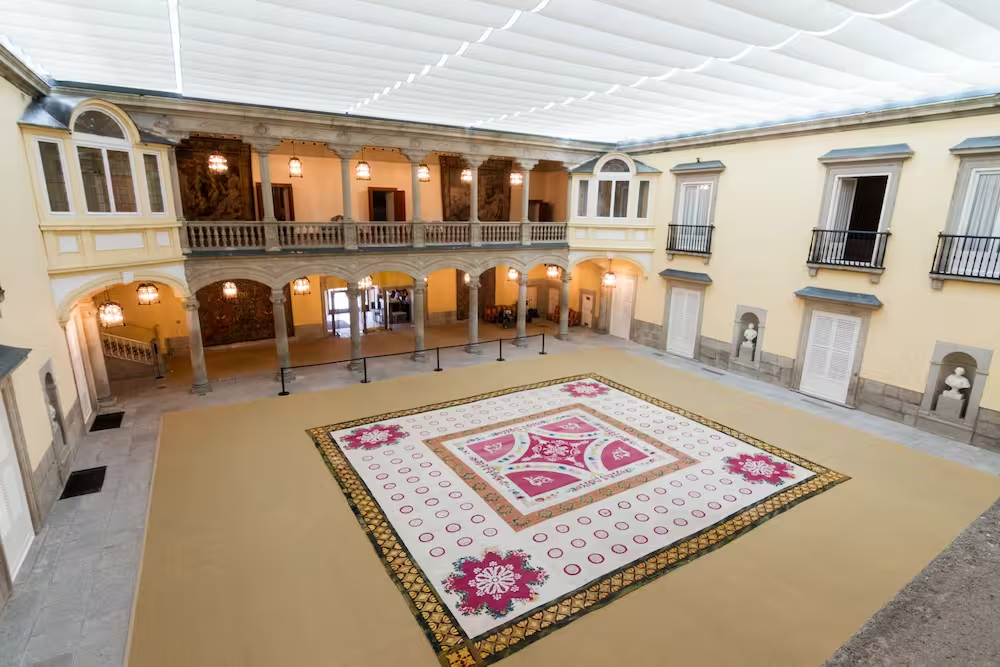
To decorate the new rooms —intended for the Princes of Asturias and their children—, Charles III commissioned tapestries from the Royal Factory from 1775 onwards, distributing the preparatory cartoons among several court painters. It was in this context that a young Francisco de Goya painted some of his best-known works today: The Kite, The Parasol, The Maja and the Cloaked Men, The Pottery Seller or The Fair of Madrid —cartoons intended for the bedroom and rooms of the Prince of Asturias that are now exhibited in the Prado Museum, without many visitors connecting them to the walls for which they were painted. Charles III’s death interrupted the programme when it was reaching its full perfection. Although tradition holds that María Luisa was mortally bored at El Pardo, Charles IV maintained the custom of frequenting the palace in winter because of his love of hunting. However, the course of the 19th and 20th centuries ended up diluting that splendid collection, dispersing much of the tapestries woven for other Royal Sites, such as El Escorial or the Royal Palace of Madrid, far from the walls for which many of those works were conceived.
The 20th Century and the Present Day
The palace was in the Republican zone throughout the war. It served temporarily as a barracks for the brigades defending the sector, but it did not suffer direct bombings or major structural destruction, so the damage was moderate.
Once the conflict was over, it was restored and became the official residence of Francisco Franco, who lived there from 1940 until his death in November 1975 —longer than any monarch who had occupied it before—. Major diplomatic decisions of the regime were taken or prepared from El Pardo: the Concordat with the Holy See and the cooperation agreement with the United States, both in 1953, which opened Spain to the Western world after the post-war isolation. It was there that the wedding of his granddaughter Carmen Martínez-Bordiú to Alfonso de Borbón was celebrated in 1972. And it was there that Franco suffered the first episodes of the illness that took him to La Paz Hospital, where he died on 20 November 1975.
After his death, the palace was incorporated into the national heritage and opened to the public. Visitors can admire today its collection of tapestries —those that survived the successive dismantlings under Philip V, Charles IV and Franco himself— and the furniture that accompanies them.
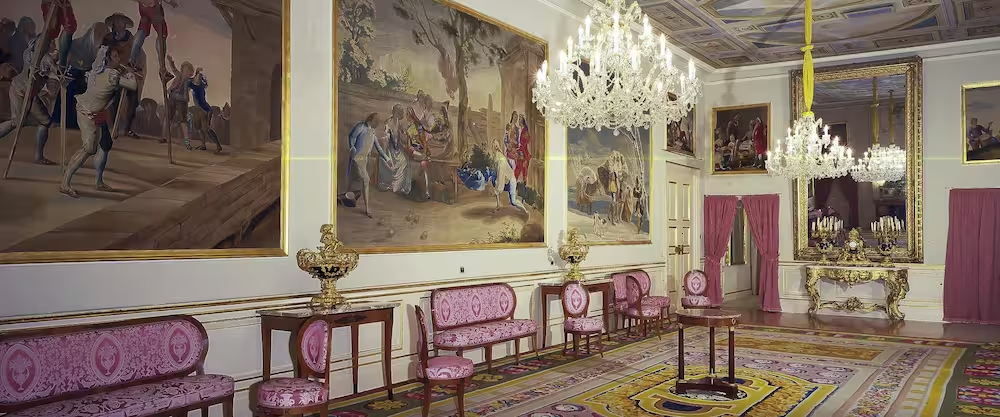
Today, the Palace of El Pardo remains a place full of history and at the service of the Crown. It is a space open to the public that preserves its beauty and importance. Its rooms, decorated with tapestries and historical paintings, receive thousands of visitors every year —more than 36,500 in 2024—, while the forest that surrounds it maintains the same calm as it did more than six hundred years ago.
Consulted Websites
- Patrimonio Nacional: the Palace of El Pardo.
- COAM: Entry on the Palace of El Pardo.
- Museo del Prado: Palace of El Pardo.