The shootings of 3 May 1808 in Madrid are among the most debated episodes of the Peninsular War — and the question of where exactly they took place remains open.
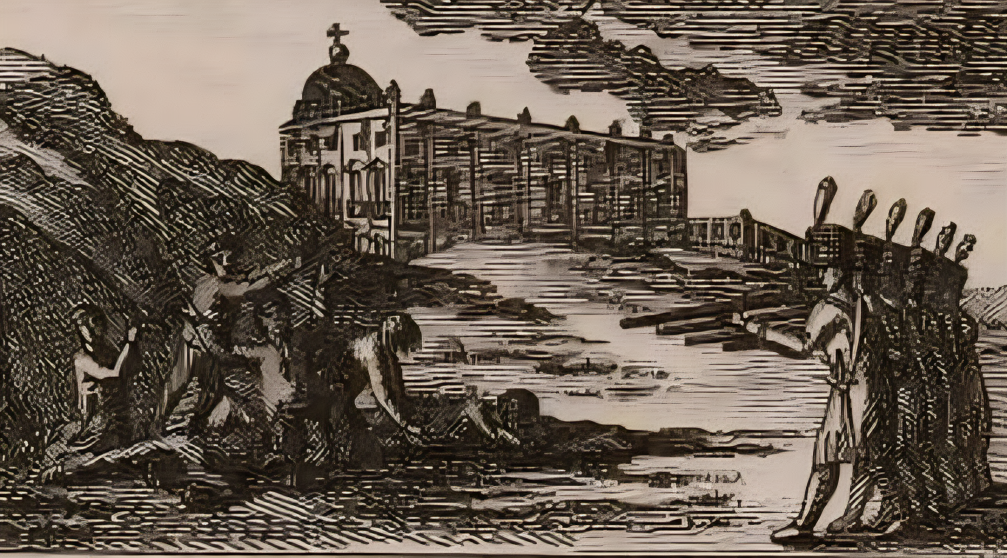
“They shot three groups, each of forty people, at El Prado. Many (the figures are not known) were shot at the Church of La Soledad, near the Puerta del Sol. And other groups of 30 or 40 met a similar fate near the Puerta de San Vicente.”
The British Consul in Madrid to His Britannic Majesty’s Secretary of State for Foreign Affairs, 2 May 1808 [i]
Oderint dum metuant
Madrid, shortly after two in the afternoon on 2 May 1808. The citizens who had been fighting in the streets and squares have withdrawn to their homes, obeying the proclamation of the Supreme Junta. The fighting has stopped. What else could they do? All had been lost from the outset — they were no match for so superior an enemy. And yet many had thrown themselves into the streets, to fight the French, to drive out the invader… It was the people who shed their blood, because no one else stood at their side. Where were the great lords? Where was the army? Only a handful of them joined the people. In any case, it had all been lost from the start… And now the city presents a desolate scene in which terror and horror reign on every side. In some places the smell of gunpowder still lingers, and many buildings bear the marks of bullets and shrapnel, their windows shattered. The streets are strewn with corpses; the wounded and dying lie in pools of blood amid weeping and moaning, the search for those who have not yet come home, the anguish of finding a loved one’s face among the dead. French soldiers everywhere, haughty and brutal. They are the masters of the city.
Murat, generous in victory and self-styled peacemaker, had given his word to spare the lives of the citizens of Madrid and take no reprisals if they ceased fighting and returned to their homes. But Murat is not going to keep his word, for he wants to make a harsh example of the people of Madrid. There is no forgiveness. Houses ransacked… murders, rapes, looting… The French commit every kind of outrage, and no one stops them, no one stands against them… The people of Madrid are alone and defenceless. And as if all the blood already spilled were not enough, the French begin to shoot [ii] the prisoners: at El Prado, in front of the Retiro stables, in the courtyard of the church of El Buen Suceso, by the Puerta de Atocha…
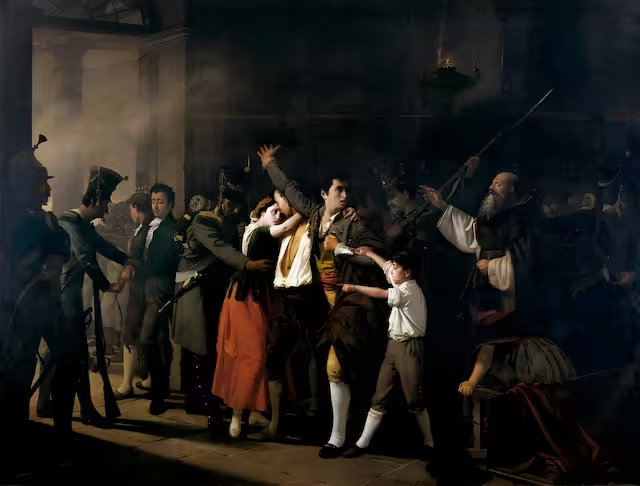
As evening fell, satisfied with the punishment inflicted and sated with bloodshed, the order was given to decimate the prisoners still held under guard and to release the rest [iii]. After a macabre draw, 44 prisoners were condemned to death. This final round of shootings took place in the early hours of 3 May.
Goya, The Third of May in Madrid. Did He Witness It?
On 24 February 1814, Goya wrote to the Regency offering to capture with his brushes the heroic struggle of the Spanish people against French domination. The letter has been lost, but the archives of the Royal Palace preserve the reply he received, accepting his proposal and assigning him a monthly stipend for the duration of the work.
“Gobernación de la Península.
In a submission dated the 24th of last month addressed to the Regency of the Kingdom by Don Francisco Goya, Painter to His Majesty’s Chamber, he expresses his ardent desire to perpetuate by means of his brush the most notable and heroic actions and scenes of our glorious insurrection against the tyrant of Europe; and having set forth the state of utter penury to which he finds himself reduced and the consequent impossibility of defraying on his own the costs of so worthwhile an undertaking, he requests that from the public treasury some assistance be provided to enable him to carry it out. In view of the foregoing, and His Highness having taken into consideration the great importance of so praiseworthy an enterprise and the well-known capacity of the said professor to execute it, he has seen fit to accept his proposal, and to order accordingly that for so long as the aforementioned Don Francisco Goya is employed in this work, there shall be paid to him by the Treasury, in addition to whatever amounts may appear from his accounts to have been spent on canvases, materials and colours, the sum of one thousand and five hundred reales de vellón per month by way of compensation.
By order of His Highness I communicate this to Your Lordship for your information and to the end that through the Secretariat under your interim charge you may be pleased to issue the appropriate instructions for its fulfilment in the part that falls to you, charging that the payment of the said allowance be prompt and punctual, so that so illustrious and meritorious a Professor may not lack, in his advanced age, the means of subsistence. God save Your Lordship many years. Palace, 9 March 1814.
Juan Álvarez Guerra
To the interim Secretary of the Treasury [iv]”
The outcome of this work, which occupied the brilliant Aragonese painter until November 1814, was two paintings dedicated to 2 and 3 May 1808 respectively. He had not been the first artist to depict these events. For example, in July 1813 Goya might have attended a performance at the Teatro del Príncipe of the tragedy “El día dos de mayo de 1808 en Madrid y muerte heroica de Daoíz y Velarde” by Francisco de Paula Martí, a work that was very well received, and it is quite possible that he was familiar with the various prints then circulating in Madrid that may even have served as inspiration for his two paintings. These prints, which enjoyed great popularity, were:
- The four engravings by Tomás López Enguídanos published under the general title “Día dos de mayo de 1808. En Madrid” and announced in the Diario de Madrid of 11 June 1813: “The 1st plate shows the Plaza de Palacio, where the French provoked the wrath of the people; the 2nd, the artillery park where Daoiz and Velarde died; the 3rd, the events and bloody skirmish between patriots and French at the Puerta del Sol; and in the 4th, the horrifying scene is depicted with the utmost fidelity in which the French murder the unarmed patriots at the Prado.”
- Gamborino’s engraving “Los cinco religiosos fusilados en Murviedro”, made available to the Madrid public in October 1813.
- The engraving by Zacarías González Velázquez depicting the shootings at the Prado, which appeared in late April 1814.
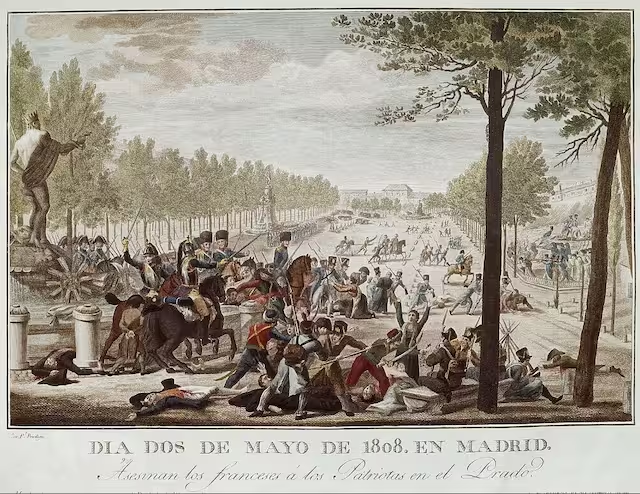
Both López Enguídanos and González Velázquez chose to depict the shootings at the Prado, since these were undoubtedly the ones that had the greatest psychological impact on the people of Madrid. So why did Goya choose to paint the shootings of 3 May? To set himself apart from other artists? For aesthetic reasons?… Or perhaps because he witnessed that terrible scene himself?
“— Have you seen, — old Isidro told us [Isidro had been Goya’s gardener], — those horrors of the war that my poor master painted so admirably? Well, that bell tolling at La Florida reminds me that on a day and a night like tomorrow’s my master conceived, mad with indignation, the idea of painting those horrors. From that window [the narrative is assumed to take place at the ‘Quinta del Sordo’, Goya’s former home] he watched the shootings on the Montaña del Príncipe Pío, with a spyglass in his right hand and a blunderbuss loaded with a handful of shot in his left. If the French had come here, my master and I would have been another Daoiz and Velarde. As midnight approached, my master said to me: — ‘Isidro, take your blunderbuss and come with me.’ I obeyed him, and where do you think we went? We went to the Montaña, where the poor shot men still lay unburied. I remember it all as if it were yesterday. It was a moonlit night, but as the sky was full of black clouds, one moment it was light and the next dark. My hair stood on end when I saw my master, blunderbuss in one hand and sketchbook in the other, making his way toward the dead. Noticing that I seemed uneasy, my master asked me: — ‘Are you trembling, Othello?’ Instead of replying: ‘Not a bit of it,’ I almost burst into tears, thinking the poor man had gone mad, for he was calling me Othello instead of Isidro. We sat down on a bank at the foot of which the dead lay, and my master opened his sketchbook, placed it on his knees and waited for the moon to pass behind a cloud that was obscuring it. Below the bank something was flapping, grunting and panting. I… I confess it to you, I was shaking like a leaf; but my master remained perfectly calm, feeling his way in the dimness to prepare his pencil and paper. At last the moon shone as bright as day. In the midst of pools of blood we saw a number of corpses, some face down, others face up, this one in the posture of one kneeling to kiss the ground, that one with hands raised to heaven begging for vengeance or mercy, and some starving dogs were tearing at the dead, panting with eagerness and snarling at the birds of prey that hovered above, seeking to dispute their prize!” While I gazed on that horrible scene, filled with horror, my master was sketching it. We returned home, and the next morning my master showed me his first print of The War, which I examined with horror.” [v]
What courage Goya showed, and what a gruesome image — the dogs disputing the bodies of the dead with the birds of prey. But the story is wholly implausible for several reasons:
— How did he find out the place and time of these executions? Even if some acquaintance had been aware of this information, would he have risked his life to pass it to Goya, evading the French patrols that roamed Madrid? And with what purpose? Equally, had the painter ventured near the site of the execution that night — especially while armed — he would have faced immediate execution if discovered [vi]. The hypothesis that it was a chance discovery while scanning the horizon with his spyglass can also, I believe, be ruled out.
— In 1808 Goya was living at number 15, Calle Valverde — on the corner of Calle del Desengaño, block 345. He would not acquire the Quinta del Sordo until February 1819.
— He could not have witnessed the executions through a spyglass either from the Quinta del Sordo (let alone from his home on Calle Valverde). The distance (approximately 1.5 km), the lie of the land and the buildings in between would not have allowed it.
Did the Shootings Take Place near the Puerta de la Vega?
These are the only executions whose precise location remains unknown, and several historians and researchers have advanced theories in an attempt to answer this question. Among the principal sources of evidence used, Goya’s painting occupies a prominent place: by identifying the architectural and topographical features depicted by the artist on the canvas, various theories have been developed.
The Museo del Prado, one of the foremost authorities on Goya and his work, devotes two entries on its website to “The Third of May in Madrid”, with the particular feature that each of them places the site of the shootings at a different location.
In the first of these texts, the author notes that the setting is reminiscent of “the silhouettes of church towers, the monumental gateway and the arrangement of the houses in the background and the earthwork on the left, the area at the exit of the Puerta de la Vega, demolished in 1820 and situated at the end of the Calle Mayor. The tallest tower could thus be that of the church of Santa Cruz, then known as the ‘watchtower of Madrid’ for being the tallest in the city and visible from a distance. The other, shorter one, would be that of Santa María la Real, the palace church [vii], and the earthwork against which the men are being shot, the terrain near the Palace, situated to the left, outside the scene, so that Goya may have implied here too that the rebels died in defence of the Crown.” [viii]
Comparing this perspective proposed by the Prado with what the area looks like today is virtually impossible, as the urban landscape has changed enormously since that night in May 1808 — not least because neither the Puerta de la Vega nor the church of Santa María nor the church of Santa Cruz survive [ix].
We can, however, compare it with the view of Madrid offered by Antonio Joli which, although dating from around 1753, would have been very similar to what could be seen in 1808. The reader may judge the resemblances.
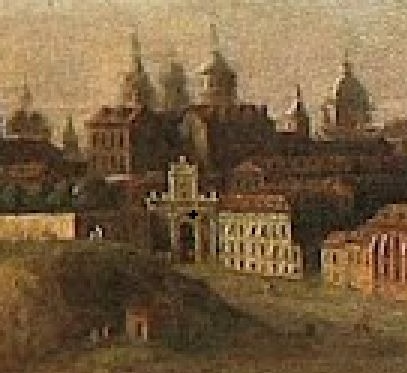
The second location proposed by the Museo del Prado will be discussed below.
The Walls of the Prince Pío Estate
In 1835 the Spanish politician and historian José M.ª Queipo de Llanos, Count of Toreno, whose work is a key historiographical reference for the Peninsular War, wrote: “Not satisfied with the blood spilled during the night, the invaders continued the following morning to shoot some of those arrested the previous day, for which purpose they designated the enclosure of the house of the Prince Pío.” [x] This testimony rules out the theory of the shootings near the Puerta de la Vega, since no property of the Prince Pío existed at that location, and it also provides a new clue to finding where they actually took place.
Drawing on this information, the art historian and Chief Curator of the Department of Paintings at the Musée du Louvre, Jeannine Baticle, placed the scene in the vicinity of the Plazuela de los Afligidos (today’s Plaza de Cristino Martos), since it was in that square — specifically in block 557 — that the house and oratory of the Prince Pío were located. [xi]
As a result of her study, she proposes that the two towers with spires that appear in Goya’s painting correspond to those of the convent of San Joaquín, which stood opposite the Prince Pío’s house, with the Conde Duque barracks visible behind the convent.
In this area too, the passage of time has brought significant urban changes, so in order to form a clearer picture of this historian’s proposal it is useful to consult the plan by her compatriot, the cartographer Nicolas Chalmandrier — commissioned by Charles III in 1761 — which shows the principal buildings of the city in bird’s-eye perspective.
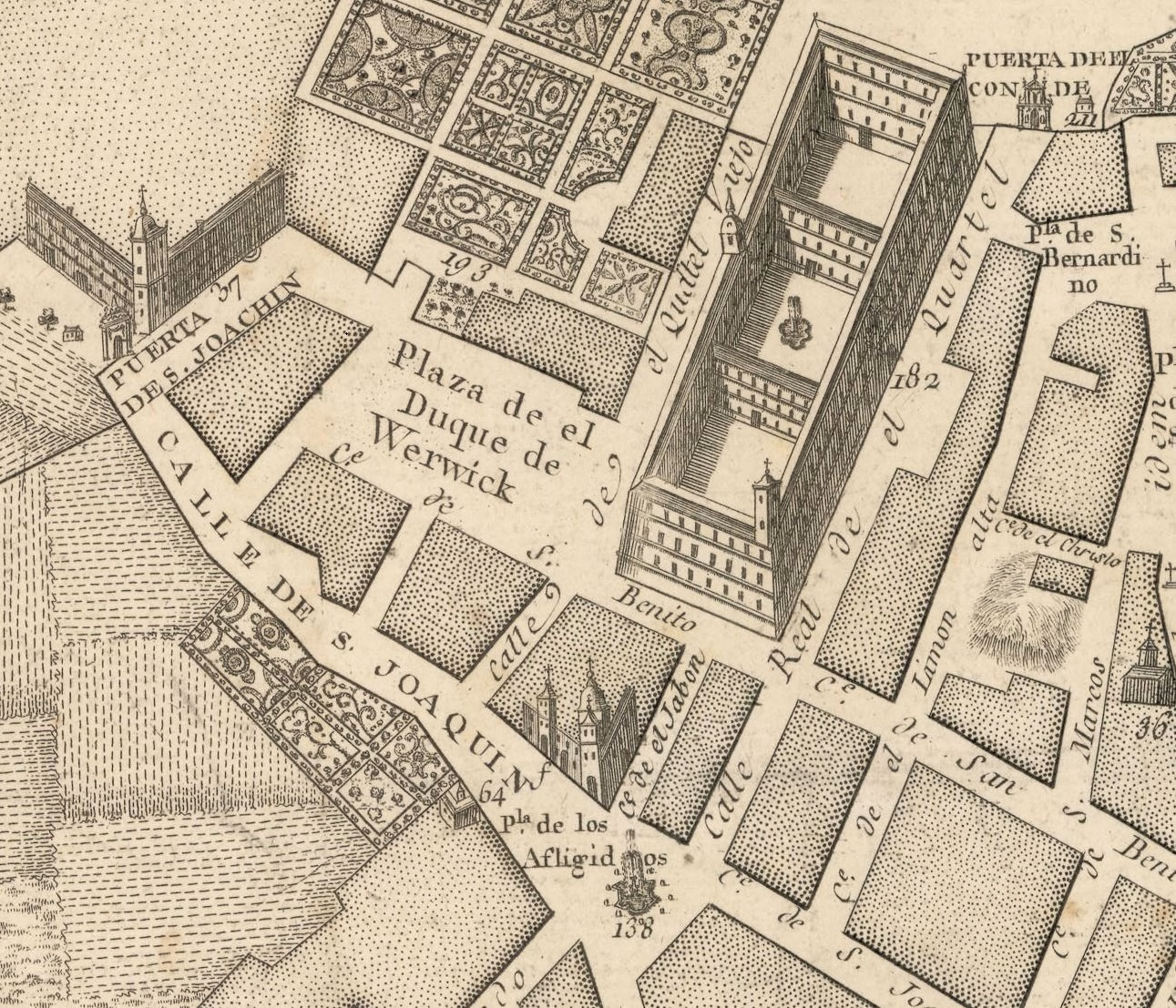
Where would the hillside that Goya paints behind the condemned men have been located?
The Testimony of Juan Suárez
We now add a key piece of testimony to the investigation, one that places the executions on the slopes of the Montaña del Príncipe Pío. This is the account of Juan Suárez, one of the 44 condemned to be shot but who managed to escape from the jaws of death at the very last moment. Suárez recounts how “[…] he presented himself at the Artillery Park to open fire on the enemy as he did, having first helped to bring out the cannon, remaining steadfast at the side of the immortal Commanders Daoiz and Velarde while they lived, and how afterwards, when the enemy occupied that place, he fled to his home, at the door of which the Baygorrians [xii] seized him with a pistol he was carrying, on account of which, and despite the fact that they beat him with their muskets, they brought him to Murat’s Palace [xiii], from where he was transferred to the Polish barracks [xiv] to be taken out and shot in the morning of the third with many others, and indeed at four in the morning he was led out bound for the Montaña del Príncipe Pío, where, as he knelt with the rest to receive the volley, he managed to free himself, and when it was fired, feigning death before the shots rang out, he threw himself rolling down that slope to the hollow below, receiving no injury from two volleys that were fired at him, but observing that thirteen or fourteen men were coming after him he managed to leap over the walls in the course of which he received three sabre cuts, one of which cut his hair and the other two wounded his left thigh and right shoulder, managing in spite of everything to save his life from those enemies who pursued him all along the riverbank until the chaplain and sacristan of Our Lady of the Port were able to render him the assistance of concealing him, as they concealed themselves inside the church, as the parish priest of San Antonio de la Florida and Victoriano Rodríguez, Don Mariano Marchán, Don Francisco Fernández, and many other persons of distinction can testify, all of them being aware of all the hardships and dangers suffered by the applicant in upholding the just cause of the King and the Nation.” [xv]
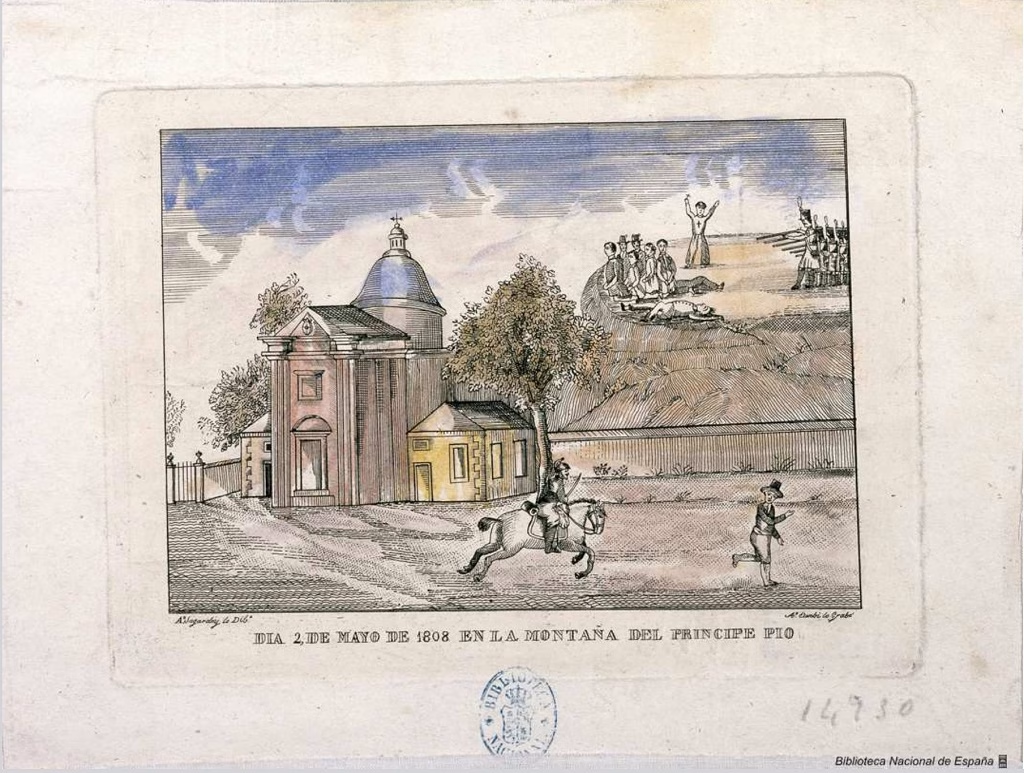
The Montaña del Príncipe Pío
Let us pause here to learn a little more about the Montaña del Príncipe Pío, which takes its name from Francisco Pío de Saboya y Moura, Marquis of Castel Rodrigo and Prince Pío (among other titles), one of the owners of this hill. In 1808 the Montaña stood at what was then the northwestern edge of the city, and its grounds belonged to the Royal Estate of La Florida and La Moncloa. Madoz provides the following details: “This estate is one of the properties making up the Royal Estate of La Florida. It lies to the south of it: bounded on that side [the south] by the calle and cuesta de San Vicente; to the north by the road of the cuesta de Areneros [today’s Calle de Quintana], to the east by the road of San Bernardino [today’s Calle de Isaac Peral], the gate of that name and the plazuela de Afligidos, and to the west by the royal road to Castile [today’s Paseo de la Florida and its continuation, the Avenida de Valladolid]. The entire estate is enclosed by a wall twelve feet high [3.3 m] built of lime and rubble with brick piers at intervals, and has for communication, among others that are disused, 4 gates: namely the so-called main gate opposite the Royal Stables; the gate of the callejón de San Gil opposite the north corner of the barracks of that name; the gate on the cuesta de San Vicente; and the gate of San Antonio opposite the gate of the same name of the Royal Estate of La Florida.” [xvi]
In the mid-nineteenth century the area became one of the favourite spots for students of the School of Fine Arts of San Fernando to practise life drawing, and one of the most popular promenades in Madrid: “The mountainous part, which is the most considerable, has in recent years been transformed into pleasant walks which today, owing to their fine situation, their extent and their delightful views, constitute one of the principal and most agreeable places of recreation that Madrid can boast.” [xvii]
One of these promenades, known as the Paseo del Príncipe Pío, was accessed through a gate on the Cuesta de San Vicente, opposite the Royal Stables. [xviii] The walk began along a shady tree-lined avenue, passing on the right a well-known dairy farm, and continued along a poplar grove bordering a small wood.
The extent of the Montaña was greatly reduced when a considerable area of its land was taken to build the old Estación del Norte and the Argüelles neighbourhood. [xix]
The Plaza de España
We return to our investigation by recalling the two clues gathered so far:
1. The prisoners were shot against the wall of the Prince Pío estate.
2. The executions took place on the Montaña del Príncipe Pío.
We now turn to the theories of two further researchers who have reached the same conclusion about the location of the 3 May shootings: the Plaza de España — or rather, the area of the Plaza de España, since that square did not exist at the time, not even as a public space.
The first of these researchers is the art historian Jesús María Alía Plana. His study is based on the following points:
1. As shown on the plan by Martínez de la Torre (1800), the wall of the Prince Pío estate began at the Cuartel del Prado Nuevo, continued along the Calle de los Reyes, then turned along San Bernardino and ended at the gate of the same name.
2. The Cuartel del Prado Nuevo, which as noted above occupied much of the present-day Plaza de España, was adjacent to the southeast slope of the Montaña del Príncipe Pío.
3. The hollow mentioned by Juan Suárez corresponds to that described by Mesonero Romanos between the Plaza de Leganitos “and the Plazuela de Santo Domingo, where the Calle de los Reyes and the Calle de San Marcial now run, in the valley or hollow formed between the two hills, there ran in the open an esgueva or gully coming from the upper part of Santa Bárbara, a formidable obstacle to communication with the new district of Los Afligidos, which was partly concealed for centuries by means of a bridge that stood opposite the Calle de Leganitos.” [xx]
He identifies the towers visible in Goya’s painting as “the small tower situated between the Calle del Limón bajo (today’s Calle del Río [xxi]) and the Calle del Reloj, and finally the tower of the Convent of Doña María de Aragón.”
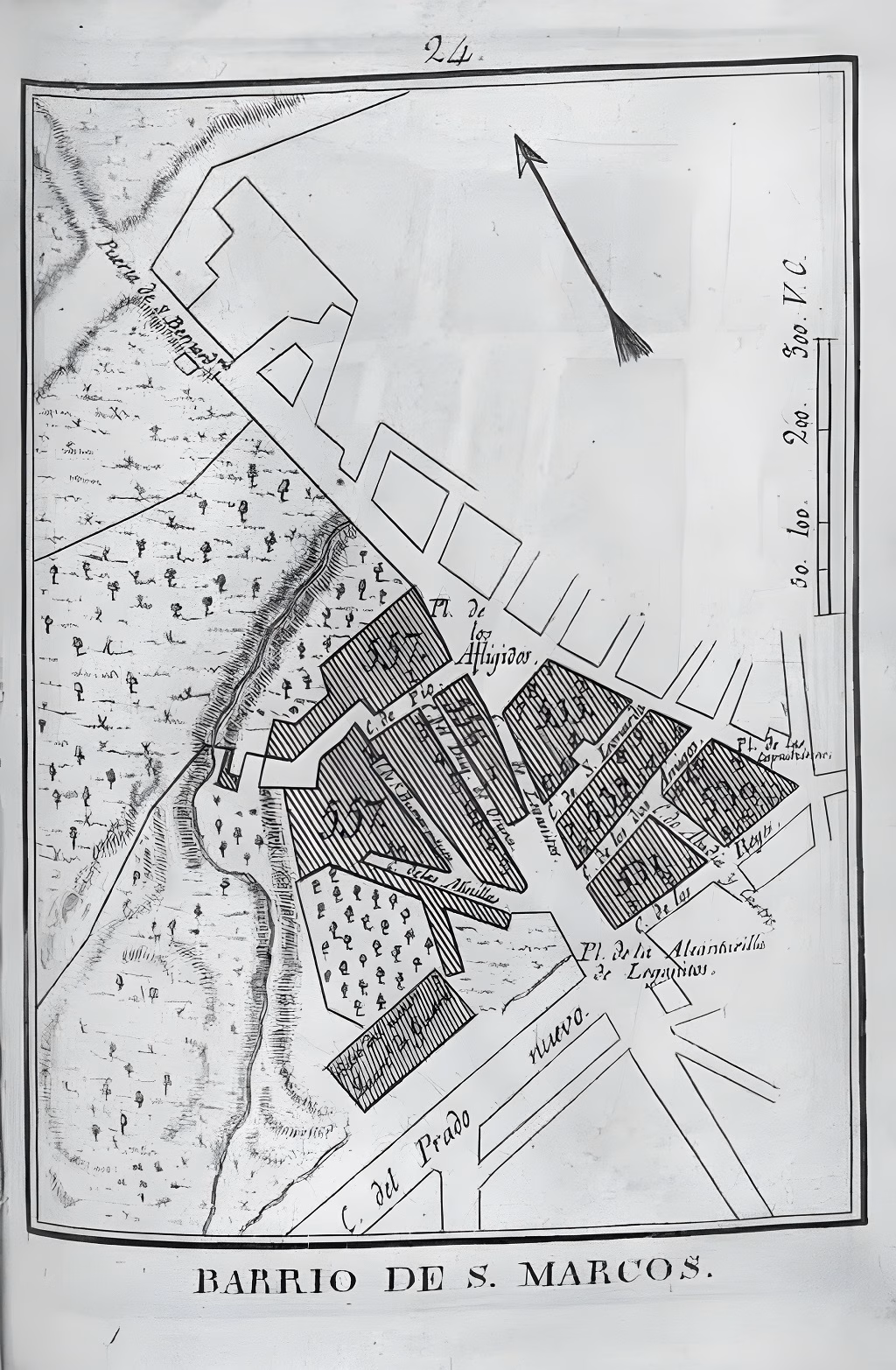
The second researcher — and no preference is implied by the order — is Manuela Beatriz Mena Marqués, a doctor in art history who served as Head of Conservation of Eighteenth-Century Painting and Goya at the Museo Nacional del Prado. She is the author of the other entry that the Prado’s website devotes to “The Third of May in Madrid.” She explains: “The site of the shooting is perfectly recreated by the painter with the accuracy of a topographical view of the city. Beyond the ‘hillside’ against which those who are about to die are placed, the line of the last condemned men advances from the buildings in the background, demolished during the nineteenth century: the Cuartel del Prado Nuevo, where they had been confined until the time of the execution, and the convent of Doña María de Aragón, near what had been the Godoy palace.” [xxii]
A Work Obstructed
Just when we thought the puzzle had been happily solved, a new document enters the scene: a complaint from the administrator of the Royal Estate of La Florida, whose workers had found their work on the Montaña del Príncipe Pío brought to a halt. The reason? Read on:
“Florencio Martín, acting administrator of the Royal Estate of La Florida, respectfully submits to Your Excellency: That in the upper part of the said estate, facing the tile kiln and the road to El Pardo, there are several corpses of the unfortunate victims who lost their lives on the 3rd of this month, which are preventing the continuation of a covered channel or drain being built to carry water to the lower grounds for irrigation, and their removal being necessary. He begs Your Excellency that, in the exercise of your well-known goodness, you may be pleased to authorise (with the agreement of the Supreme Governing Junta) the removal of the said corpses so that they may be carried to the cemetery of the same Estate, with the necessary precautions, for burial, and that the workmen may continue their work. Madrid, 8 May 1808.” [xxiii]
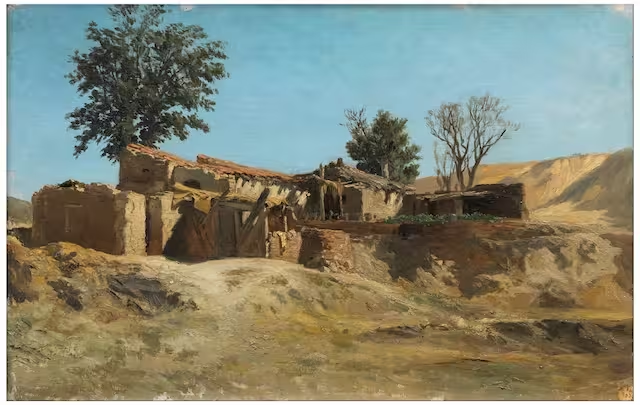
The corpses of those shot on 3 May! Since there were no tile kilns in the Plaza de España and the road to El Pardo began just over a kilometre away, at the Glorieta de San Vicente [xxiv], the Plaza de España hypothesis must be ruled out. One might argue that the bodies could have been moved there from elsewhere after the executions. But what reason would the French have had to move the bodies of those they had shot, and to a more hidden location at that? Nor do we have any evidence that such a thing occurred in any of the other shootings of that fateful day.
The Other Prince Pío Estate
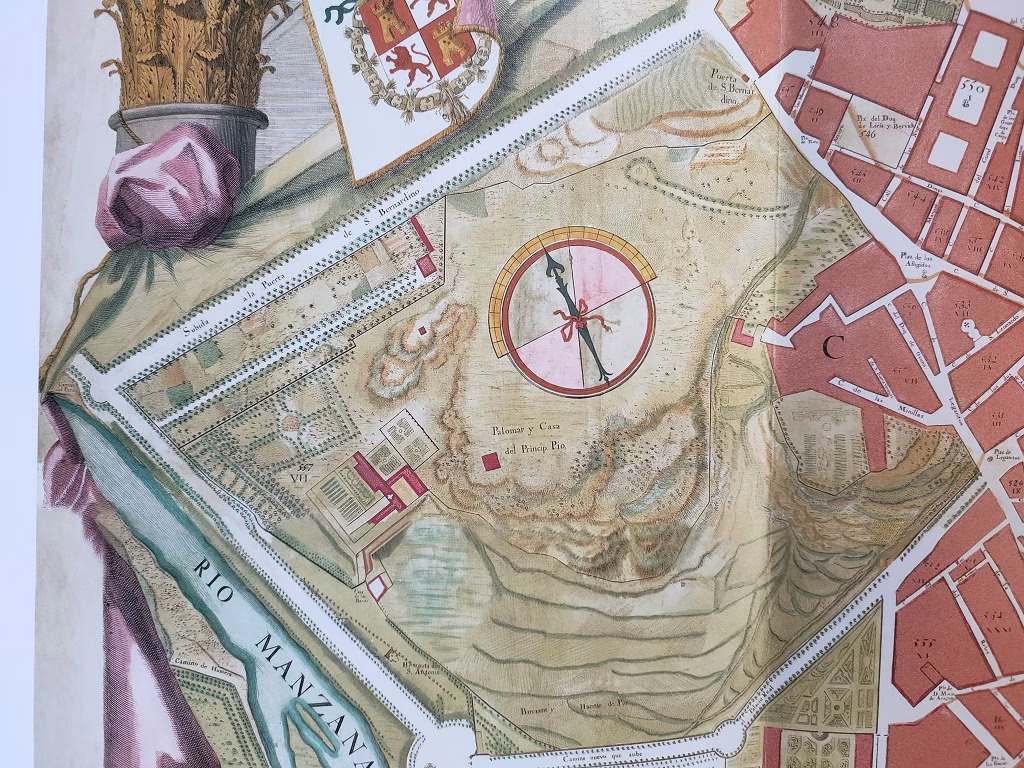
Until now we have relied on written sources, but we now turn to a map — specifically the plan of Tomás López of 1785. Observe: at the summit of the Montaña del Príncipe Pío, facing the road to El Pardo, there is a small square marked “Pigeon house and House of the Prince Pío.” Below it are some market gardens and a building labelled [block] 557. This number is repeated for another block, diametrically opposite, on the other side of the hill. This is not an error: consulting the General Survey of Madrid, we read that this block 557 belonged to the Prince Pío and encompassed several properties that had come to his family through various inheritances. Among these properties was the house in the Plazuela de los Afligidos — which has already appeared in this article — and an estate that included a pigeon house, a market garden and a house with other outbuildings. In former times this estate had been the site of the imposing Palace of the Marquis of Castel Rodrigo, but by 1808 nothing remained of that majestic building.
And there is another important detail on the Tomás López plan: this property is shown surrounded by a wall!
The Solution?
We have found another Prince Pío property enclosed by a wall, situated on the Montaña del Príncipe Pío and facing the road to El Pardo. It remains to be established whether a tile kiln stood nearby. And eureka! — we are on the right track, for the Montaña “[…] had at its summit a conical pigeon house [as we have just seen], on its slopes some tile kilns, and at its base, first a very pleasant and well-maintained grove that neglect is now causing to wither, then a path lined with hedges of hawthorn and shaded by acacias, and finally a small spring covered with creepers and surrounded by benches and trellised arbours.” [xxv]
Madoz provides further details: “Pottery and tile kilns. There are 2 kilns with a capacity of 34,000 pieces each; another 2 of 30,000; and 2 small pottery kilns with some sheds and outbuildings of poor construction.” [xxvi]
With all the information gathered, we are in a position to attempt to recreate the last journey of those prisoners, the one that led them to the place of their execution. This will confirm that everything fits together.
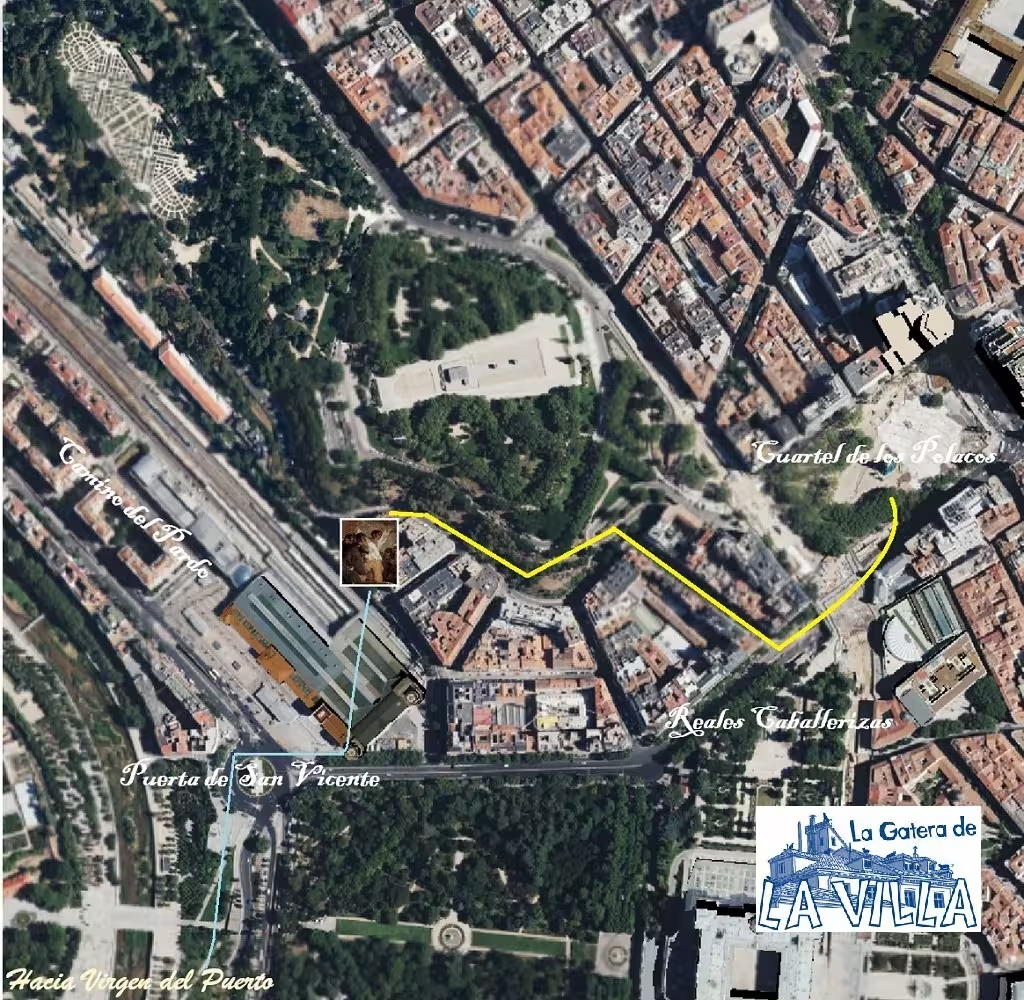
In the early hours of that morning, the prisoners — bound and escorted by a firing squad — left the Cuartel del Prado Nuevo, turning right to descend the Calle del Prado Nuevo to the Puerta de San Vicente (today’s Cuesta de San Vicente), following the wall. It had been raining and the waxing crescent moon barely showed through the clouds, so the night was very dark and the soldiers carried lanterns. After walking some 250 metres they reached a gateway that stood opposite the Royal Stables and gave access to the Royal Estate of the Montaña del Príncipe Pío. They passed through it and took the path that began at the entrance itself and climbed up the hillside (as already mentioned). They reached the wall of the Prince Pío estate. There, near a tile kiln, facing the road to El Pardo and with the Puerta de San Vicente below, the prisoners were shot. Since Juan Suárez escaped by rolling down the slope, it is very likely that they were positioned with the slope behind them and their executioners with the wall at their backs (contrary to how Goya depicts the scene in his painting); otherwise, Suárez would have had to push through his executioners to flee, which would have been extremely difficult.
Everything fits: the testimony of the British consul writing that the shootings occurred near the Puerta de San Vicente; the Count of Toreno placing them by the walls of the Prince Pío estate; Juan Suárez’s account of escaping by rolling away; the corpses near the tile kiln… And do you know what the gateway was called through which they entered the Montaña? The Puerta del Tejar — the Tile Kiln Gate!
That point would be located in the area where today the Calle Irún meets the Paseo del Rey, some 200 metres from the Puerta de San Vicente, with the distance from the barracks being just over 1 km.
And once we have established the location, is it possible to identify which buildings, visible from that spot, correspond to those shown in Goya’s painting?
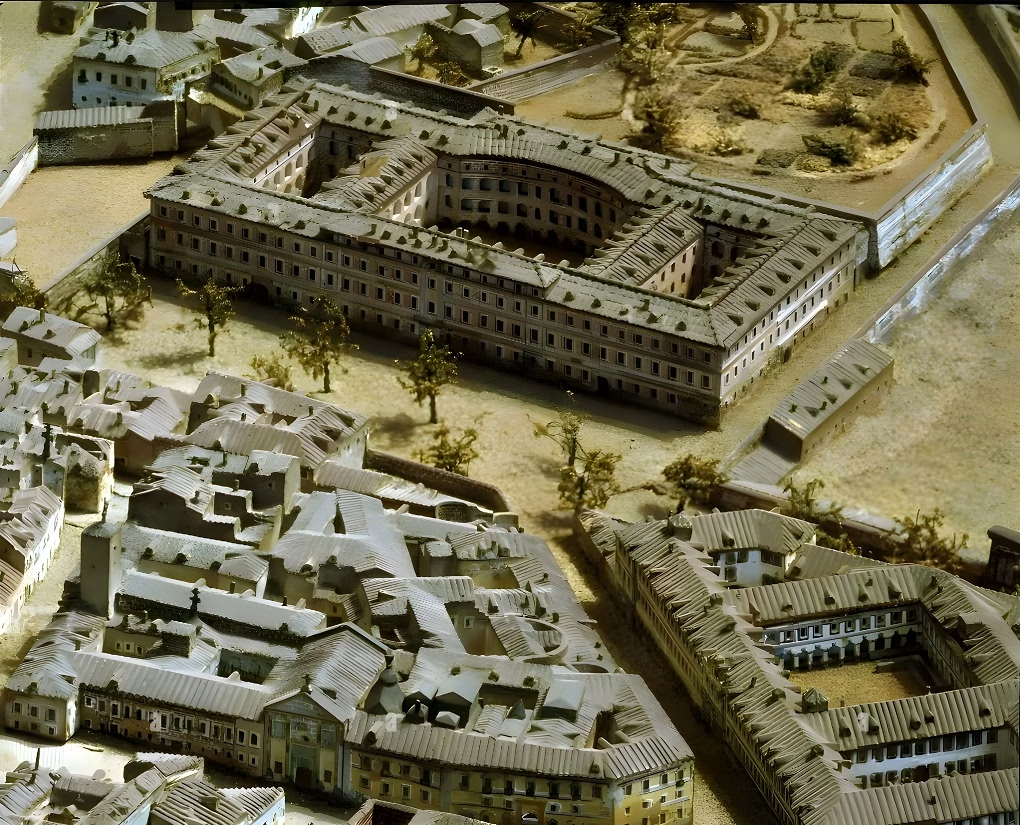
Both the impressive scale model of Madrid by the military engineer León Gil de Palacio and the view of the Royal Palace from the Montaña del Príncipe Pío by the Madrid landscape painter José María Avrial — both dating from around 1830 — can give us an idea of the urban panorama that would have been visible from the execution site. To see the city spread out below us, we would need to stand to the right of those being executed, as Goya painted it.
Having compared the scale model and Avrial’s view with Goya’s painting, can you identify any of the buildings? Do any seem to be missing?
We know that Goya did not witness these shootings, and we have no evidence that he subsequently visited the site (which does not prove that he did not). But in any case, does it matter? I share the view of those who argue that Goya was not seeking to photograph the scene with his brush, and that he therefore took certain liberties in the service of his dramatic idea. That is why the background does not correspond to any real location — it is not what the artist is seeking to achieve with this work, and he reshapes it until it serves his purpose. Another telling detail in this regard: look at the hands of the prisoners. They are not bound — yet we know that they were. Goya could not have painted the central figure extending his arms toward his executioners had he restricted himself to depicting reality. [xxvii]
Sit tibi terra levis
Murat did not allow the bodies of those shot to be buried until 4 May [xxviii], with the exception of those executed in the early hours of 3 May, to whom he continued to deny even that mark of humanity. Why this callousness toward these particular victims?
It would be a week before Julián López Navarro, parish priest of San Antonio de la Florida, obtained permission to give them, at last, Christian burial. With the help of the Congregación de la Buena Dicha [xxix] the bodies were transferred to San Antonio, where “On the twelfth day of the month of May in the year one thousand eight hundred and eight there were buried in the cemetery of this Royal Parish of San Antonio de Padua de la Florida forty-three deceased persons, who were found in a pit on the hill known as that of the Príncipe Pío; the same who were shot by the French on the third of the said month at four in the morning” [xxx], and were buried that same day in a common grave in the nearby Florida cemetery.
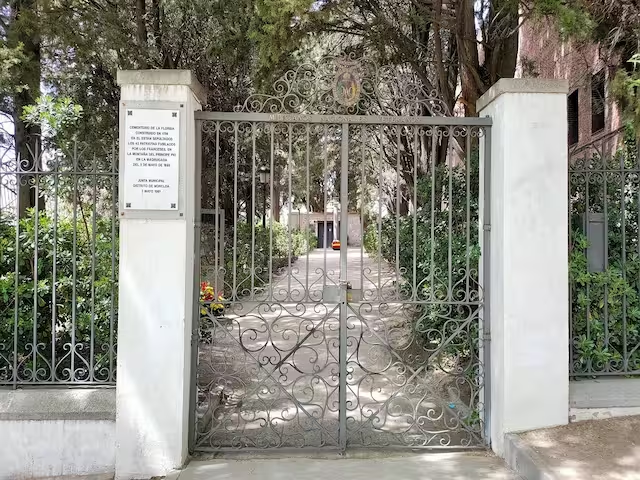
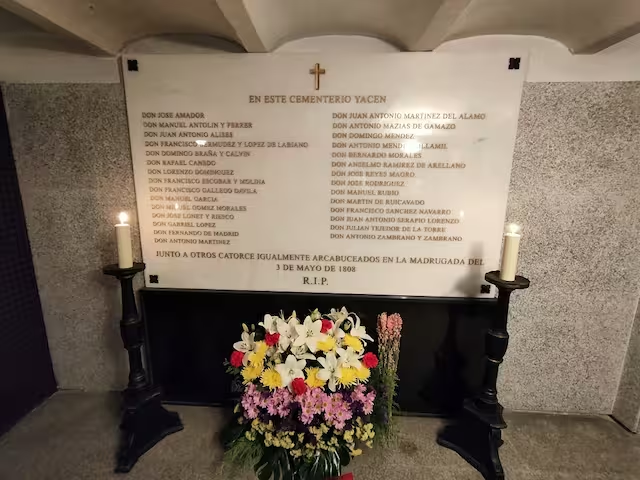
Today the remains of these 43 men shot at four in the morning on 3 May 1808 rest in the Florida Cemetery. Only 29 of them have been identified; the rest continue to lie in anonymity, awaiting the discovery of some record that might reveal their names. These are the 29 who have been identified [xxxi]:
- Anselmo Ramírez de Arellano: born in Daimiel (Ciudad Real). Married. Mounted officer of the Revenue Guard of Madrid, serving at the Portillo de Recoletos.
- Antonio Martínez.
- Antonio Mazías de Gamazo: born in Pedrosa del Rey (Valladolid). Widower, aged between sixty-six and seventy. Lived on the second floor of Calle de Toledo 12, on the corner of the Calle del Burro.
- Antonio Méndez Villamil: worked at the Church of Santiago, where he was taken prisoner.
- Antonio Zambrano y Zambrano: born in La Vecilla (León). Married with two children. Lived at number 6, Calle de San José. Worked at the Church of Santiago, where he was taken prisoner.
- Bernardo Morales: a locksmith who took part in the defence of the Monteleón Artillery Park.
- Domingo Braña y Calvin: born in Caudalosa (Asturias). Married with two children. Worked as a tobacco porter at the Royal Customs House of Madrid and fought in the defence of the Hospital de Corte and at the Puerta del Sol, being arrested by the French when found in possession of a sword.
- Domingo Méndez: a bricklayer. Worked at the Church of Santiago, where he was taken prisoner.
- Fernando de Madrid: Married. Carpentry foreman at the works on the Church of Santiago, where he was arrested.
- Francisco Bermúdez López de Labiano: born in Segovia. Married, and gentleman of the bedchamber to King Charles IV. Fought in the Calle Ancha de San Bernardo, where he lived, until he was arrested.
- Francisco Escobar y Molina: master coachmaker. Married.
- Francisco Gallego Dávila: born in Valdemoro. Priest and second sacristan of the Royal Convent of the Encarnación. Fought in the vicinity of the Palace, being arrested with weapons in hand.
- Francisco Sánchez Navarro: royal notary and receiver of the Royal Councils.
- Gabriel López.
- José Amador: Married. Bricklayer’s labourer working on the construction of the Church of Santiago.
- José Lonet y Riesco: shopkeeper in the Plazuela de Santo Domingo. Married with one child. Arrested while fighting in the Calle de la Inquisición (today’s Calle de Isabel la Católica).
- José Reyes Magro: worked on the construction of the Church of Santiago.
- José Rodríguez: fought alongside his father, owner of a refreshment stall on the Carrera de San Jerónimo, in the defence of the Monteleón Artillery Park. His father died in the fighting.
- Juan Antonio Alises: born in Villarrubia del Guadiana (Ciudad Real). Royal groom in the service of the Infante Don Carlos. Married with two children.
- Juan Antonio Martínez del Álamo: Single. Employee of the Royal Revenue.
- Juan Antonio Serapio Lorenzo: born in Madrid. Single. Employee of the Royal Guard.
- Julián Tejedor de la Torre: born in Madrid. Forty-one years old. Married with three children. Silversmith with a shop in the Calle de Atocha. Fought bravely in the vicinity of the Consejos and in the Plaza Mayor.
- Lorenzo Domínguez: saddler with a shop in the Plaza de Matute. Fought in the surroundings of the Plaza Mayor.
- Manuel Antolín y Ferrer: born at El Buen Retiro. Twenty-one years old, single. Assistant gardener at the Royal Estate of La Florida.
- Manuel García: soldier of the Regiment of State Volunteers. Married with three young children. Fought in the defence of the Monteleón Artillery Park. Arrested when taken from his home.
- Manuel Rubio: worked on the construction of the Church of Santiago.
- Martín de Ruicavado: resident of the Valle del Tor. About thirty years old, married. Stonemason at the Royal Estate of La Florida.
- Miguel Gómez Morales: fought near the Royal Palace.
- Rafael Canedo: born in Campo de Baraya (León). Married. Fought at the Puerta del Sol.
Honour and Glory to the Heroes of the Second of May
Note
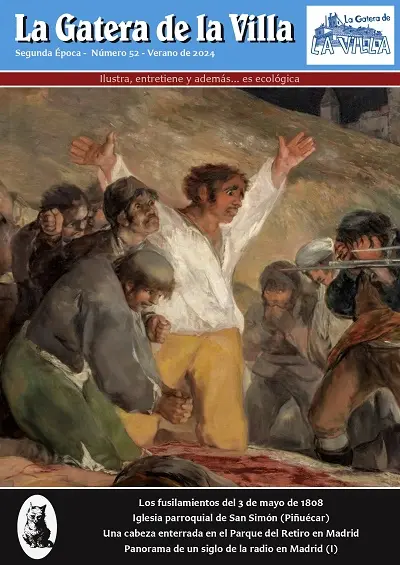
This article was previously published in issue 52 of the magazine “La Gatera de la Villa”, with additional illustrations.
Related Articles
- The Death of Daoiz and Velarde (in Spanish)
- The Myth of the Prisoners of the Second of May (in Spanish)
Sources
Books
• ALÍA PLANA, Jesús María: Dos días de mayo de 1808 en Madrid, pintados por Goya. Madrid, 2004.
• ANDIOC, René: Goya: letra y figuras. Madrid, 2008.
• APARISI LAPORTA, Luis Miguel: El cementerio de La Florida. (Fusilamientos del Tres de Mayo de 1808). Madrid, 2008.
• BATICLE, Jeannine: Goya. Madrid, 2004.
• CAMBRONERO, Carlos: Crónicas del tiempo de Isabel II. Madrid, 1890.
• CANELLAS LÓPEZ, Ángel (ed.): Francisco de Goya. Diplomatario. The original full text is available at https://ifc.dpz.es/publicaciones/ebooks/id/1054
• Guía Completa del Viajero en Madrid. Madrid, 1867.
• MADOZ, Pascual: Madrid. Audiencia, Provincia, Intendencia, Vicaria, Partido y Villa. Madrid, 1848.
• MESONERO ROMANOS, Ramón de: Nuevo manual historico-topografico-estadistico, y descripcion de Madrid. Madrid, 1854.
—– El antiguo Madrid: paseos históricos-anecdóticos por las calles y casas de esta villa. Madrid, 1861.
• PÉREZ DE GUZMÁN Y GALLO, Juan: El Dos de Mayo de 1808 en Madrid. Madrid, 1908.
• Planimetría general de Madrid y visita general de casas, 1750–1751.
• QUEIPO DE LLANO RUIZ DE SARAVIA, José María (Count of Toreno): Historia del levantamiento, guerra y revolución de España. Madrid, 1835.
• RÉPIDE, Pedro de: Las calles de Madrid. Madrid, 1971.
• TRUEBA, Antonio: Madrid por fuera. Madrid, 1878.
Journals
• ORTIZ DE PINEDO, Adelardo: “Los héroes del Dos de Mayo”, in Por esos mundos. Madrid, 1 June 1902. Available at the Biblioteca Nacional.
• SANCHO GASPAR, José Luis, and LANZAROTE GUIRAL, José María: “Imagen y realidad urbana en la vista de Madrid por Michel-Ange Houasse”, in Archivo Español de Arte, XCV, 378, April–June 2022.
• VEGA, Jesusa: “La publicación de estampas históricas en Madrid durante la Guerra de la Independencia”, in Art and Literature in Spain: 1600–1800. Studies in Honour of Nigel Glendinning. London, 1993.
Online Articles
• El 3 de mayo en Madrid o “Los fusilamientos”. Museo del Prado.
Historical Press
• Diario de Avisos de Madrid: 4 May 1811.
• Diario de Madrid: 11 June 1813, 9 July 1813, 18 October 1813 and 28 April 1814.
Notes
[i] The Consul General in Spain, John Hunter, to His Britannic Majesty’s Secretary of State for Foreign Affairs, George Canning, on the events that took place in Madrid on 2 May 1808. Published in “DOS DE MAYO DE 1808. El grito de una nación”, Arsenio García Fuentes. Madrid, 2007.
[ii] The term used at the time was arcabucear (to shoot with a harquebus); the prisoners were executed by firing squad.
[iii] But do not think the French cruelty ended there. Of those who escaped execution, some remained imprisoned for several days, during which the French continued to threaten them with death, marching them from Madrid to Chamartín, from Chamartín to the Montaña and from the Montaña to the Buen Retiro, without giving them any food, water or rest, until the morning of the 5th when they were finally released. Archivo Municipal de Madrid, 2-329-7. Available in “El Dos de Mayo de 1808 en Madrid”, Juan Pérez de Guzmán y Gallo.
[iv] “Francisco de Goya. Diplomatario”. Edited by Ángel Canellas López.
[v] “Madrid por fuera”, Antonio Trueba. Madrid, 1878.
[vi] One example is that of the brigadier of the Royal Armies and Governor of the Field and Guard of this Court, Nicolás Galet, “who, upon learning of the barbarous tragedy of his subordinates at the Portillo de Recoletos, the Puerta de Atocha and other entrances to the capital, went out to investigate on the very spot of the disasters; despite his high military rank, he was met with gunfire by those guarding the defenceless gate of Recoletos; wounded in the groin and taken to his home in the Calle de la Luna, he died on 14 August.” Parish record of San Martín, fol. 340 verso. Published in “El dos de mayo de 1808 en Madrid”, Juan Pérez de Guzmán y Gallo.
[vii] The church was known as Santa María la Mayor or Santa María de la Almudena. The royal parish was the church of San Juan Bautista.
[viii] https://www.museodelprado.es/coleccion/obra-de-arte/el-3-de-mayo-en-madrid-o-los-fusilamientos/5e177409-2993-4240-97fb-847a02c6496c
[ix] The church of Santa María was demolished in 1869 and that of Santa Cruz in 1876. The present church of Santa Cruz, with its distinctive red neo-Mudéjar tower, stands at a different site, though very close to the original.
[x] “Historia del levantamiento, guerra y revolución de España”, José María Queipo de Llano Ruiz de Saravia.
[xi] This oratory was dedicated to the Immaculate Conception, and was also known as the Chapel of Our Lady of the Conception or, popularly, as the Capilla de la Cara de Dios (Chapel of the Face of God), because among the valuables and relics kept there was the Holy Face, supposedly the cloth with which Veronica wiped the blood from Jesus on the way to Calvary. Until well into the nineteenth century this chapel was the destination of a pilgrimage held every Good Friday. The Holy Face is today in the church of San Marcos.
[xii] A detachment of the Imperial Guard, so called because its members came from the French town of Saint-Étienne-de-Baïgorry in the Atlantic Pyrenees.
[xiii] This was the Palace of the Marquis of Grimaldi, located in the Calle Nueva — today’s Calle Bailén — where Murat was staying, which is why Suárez refers to it by that name. Declared a Historic Artistic Monument in 1962, it is today the headquarters of the Centre for Political and Constitutional Studies.
[xiv] Suárez is referring to this barracks by the popular name later given to it by the people of Madrid. The barracks was the Cuartel del Prado Nuevo, which occupied much of the area of today’s Plaza de España. Construction had begun in 1789 to a design by Sabatini, and the works were completed in 1808 itself. The name “of the Poles” derives from the fact that in December 1808 it housed Polish soldiers. After the Peninsular War it was renamed San Gil. It was demolished between 1906 and 1910.
[xv] AMM, Secretaría del Ayuntamiento 2-326-8.
[xvi] “Madrid. Audiencia, Provincia, Intendencia, Vicaria, Partido y Villa”, Pascual Madoz.
[xvii] “Nuevo manual historico-topografico-estadistico, y descripcion de Madrid”, Ramón de Mesonero Romanos.
[xviii] These stables, also known as La Regalada, stood where the Jardines de Sabatini — designed by the same architect who had planned the stables — are today.
[xix] “The present neighbourhood of Argüelles was formed around 1860, on land from the Montaña del Príncipe Pío bordering the said callejón de San Marcial, the Calle del Duque de Liria and the Paseo de San Bernardino, already outside the gate of that name. The Royal Patrimony sold off a large portion of the Montaña’s land for private construction, ceding to the city free of charge the part designated as public thoroughfare.” “Crónicas del tiempo de Isabel II”, Carlos Cambronero.
[xx] “Nuevo manual historico-topografico-estadistico, y descripcion de Madrid”, Ramón de Mesonero Romanos.
[xxi] Répide notes that the Calle del Limón baja changed its name to Travesía del Reloj. The Calle del Río already existed when the Calle del Limón baja bore that name, and was also known as Calle de Mira el Río por Leganitos. “Las calles de Madrid”, Pedro de Répide.
[xxii] https://www.museodelprado.es/aprende/enciclopedia/voz/3-de-mayo-de-1808-en-madrid-los-fusilamientos-de/f0f52ca5-546a-44c4-8da0-f3c2603340b5
[xxiii] Archivo General de Palacio. Fondo Florida Cª 10.405/11. Published in “El cementerio de La Florida. (Fusilamientos del Tres de Mayo de 1808)”. Luis Miguel Aparisi Laporta.
[xxiv] The road to El Pardo followed the route of today’s Paseo de la Florida and the Avenida de Valladolid.
[xxv] “Madrid por fuera”, Antonio Trueba.
[xxvi] “Madrid. Audiencia, Provincia, Intendencia, Vicaria, Partido y Villa”, Pascual Madoz.
[xxvii] He does, however, appear to have been scrupulous in depicting the soldiers’ uniforms, as he also was in his painting of 2 May 1808. On this point I refer the reader to “Dos días de mayo de 1808 en Madrid, pintados por Goya”, by Jesús María Alía Plana.
[xxviii] “By midday on 4 May, 18 carts loaded with corpses collected from the vicinity of the Prado, the Botanical Garden and the Puerta and Alcantarilla de Atocha had come in.” “El Dos de Mayo de 1808 en Madrid”, Juan Pérez de Guzmán y Gallo.
[xxix] Its full name is “Congregación del Santo Rosario cantado de Nuestra Señora de la Buena Dicha, agregado al Vía Crucis de San Bernardino, extramuros de esta villa y sita en la iglesia de San Ildefonso, anexo de la Parroquia de San Martín.” “The core of this congregation was formed by the residents of the neighbourhood bounded today by the Calle del Pez, Corredera de San Pablo, Calle de San Vicente and Calle de Amaniel. The Stations of the Cross they followed, reciting their sung rosary, were located in what is now the upper part of the Calle de la Princesa.” Revista “Por esos Mundos”.
[xxx] Libro de Entierros de la Real Florida. Published in “El cementerio de La Florida. (Fusilamientos del Tres de Mayo de 1808)”. Luis Miguel Aparisi Laporta.
[xxxi] It strikes me that at least 7 of the 29 identified victims were craftsmen and labourers who were working that morning of 2 May 1808 on the construction of the church of Santiago, from whose scaffolding they had attacked the French with no weapons other than their tools and materials, and who, overwhelmed by the enemy’s superiority, had taken refuge inside the church, where they were arrested. The French did not recognise the right of sanctuary.