
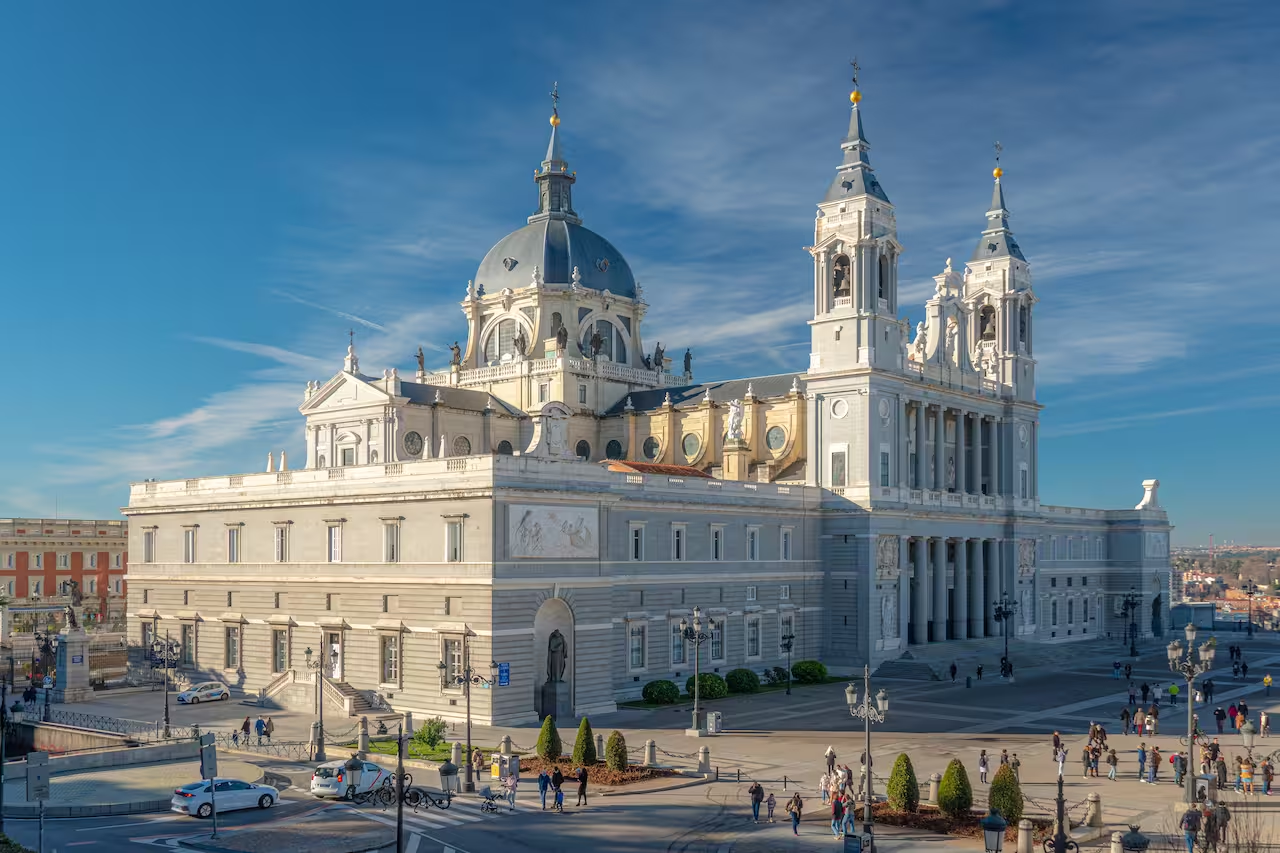
On 4 April 1883, King Alfonso XII presided over the ceremony in which the foundation stone was laid for a church that would eventually become the Cathedral of Santa María la Real de la Almudena. However, this event was not the beginning of the cathedral’s history, but rather one stage in a process that had been taking shape over several centuries.
That April morning in 1883, no one could have imagined the many obstacles that would hinder its construction over the years, including lack of funding and political upheaval. More than a century would pass from that foundation stone before the Almudena Cathedral became a reality, turning into a symbol of the city and of the history of Spain — a testament to perseverance and faith that endures to this day.
The First Attempts to Build a Cathedral
With the establishment of the court in Madrid as capital of the Hispanic monarchy, the city began to gain increasing relevance in both political and administrative terms. This process of consolidation of Madrid as a centre of power led the city to consider the possibility of breaking away from the Archbishopric of Toledo, the Dives Toletana, as it was known. That archbishopric played a key role in the ecclesiastical and political structure of the Kingdom of Castile, serving as the seat of the ecclesiastical primacy of Spain and the most important religious centre in the country. Its archbishop not only wielded considerable influence within the Church, but also exercised decisive power in the politics and society of the kingdom.
In response to this need, in 1576 the Council of the Town presented a memorial to King Philip II requesting the creation of a cathedral or collegiate church in Madrid: “This year, the Town of Madrid presented a memorial to the King, beseeching him that a cathedral or collegiate church be erected therein. Having been referred to the Chamber where His Majesty received it, he was consulted as to whether it would be advisable to erect it as a collegiate church, taking for that purpose the revenue of the Archbishopric of Toledo, up to ten thousand ducats. The King [who was at that time more focused on the construction of El Escorial] replied that the matter should be agreed upon and considered more carefully.” [1]
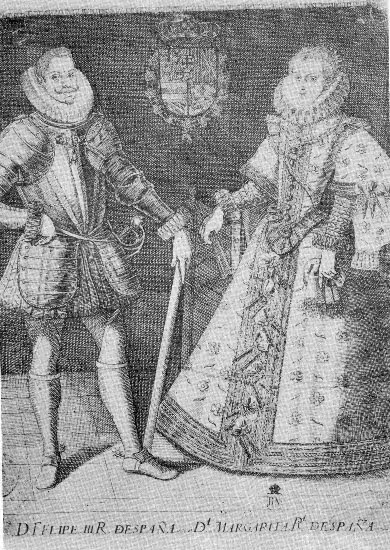
The matter made no progress and some years later the Council of the Town pressed the issue again, this time addressing the king, by then Philip III: “The Town of Madrid states that in the service of Your Majesty and the universal good of the Town and its Land, it is important and greatly needed that a Cathedral Church and seat of a bishopric be established therein.” [2] On this occasion, significant advances were made: the monarch obtained a papal bull from Pope Clement VIII officially endorsing the initiative and pledged to contribute 150,000 ducats toward its construction, with a further 500,000 from his wife, Queen Margaret. However, the aspirations of the people of Madrid met with fierce opposition from the primate archbishop, Cardinal Bernardo Sandoval y Rojas, nephew of the all-powerful Duke of Lerma. The cardinal was opposed to the idea, since the creation of a cathedral in Madrid would deprive his archbishopric of the capital of the Hispanic monarchy, affecting both his ecclesiastical influence and power and the economic benefits derived from the city. This opposition proved decisive and led to the abandonment of this second attempt.
Isabel de Borbón and the Virgin of the Almudena
In 1623, during the reign of Philip IV, the idea of building a cathedral in Madrid gained renewed momentum, prompted by a devotional act by Queen Isabel de Borbón. Pregnant and deeply devoted to the Virgin of the Almudena, the queen made an offering to endow and found a chapel in the ancient church of Santa María, the oldest in Madrid, where the image of the Almudena was kept.
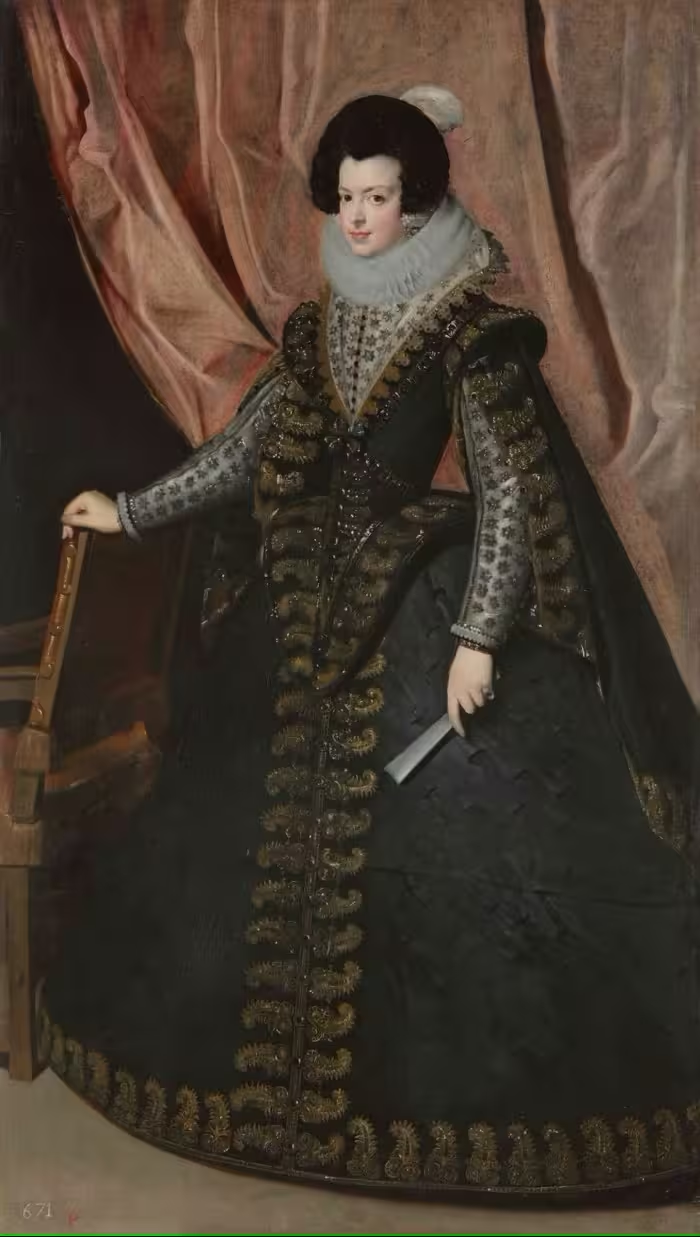
The Count-Duke of Olivares, favourite of Philip IV, and the king himself recognised the opportunity that presented itself, considering that the time had come to make real Madrid’s long-held desire for a principal church that would reflect the city’s status as capital of the Empire. The Council, as might be expected, joined the project, arguing that “The Town of Madrid states that in the service of Your Majesty and the universal good of the Town and its Land, it is important and greatly needed that a Cathedral Church and seat of a bishopric be established therein.” [3]
Enthusiasm for the idea was considerable, and Philip IV issued a royal decree establishing the means to “erect, found and build in this town a Cathedral Church under the patronage of Our Lady of the Almudena.” The Council, for its part, pledged a substantial sum of 200,000 ducats and agreed to donate as a building plot the houses that had belonged to Don Pedro González de Mendoza, situated next to the parish of Santa María. To oversee the works of the future cathedral, a Junta was created that included the corregidor of Madrid, representatives of the queen, aldermen of the town, and commissioners specially appointed to supervise the project. Juan Gómez de Mora, the king’s master builder, and his assistant Pedro Lizargárate were placed in charge of the design.
The ceremony for the laying of the foundation stone took place on 15 November 1623, a solemn act attended by various civil and religious authorities, most notably King Philip IV and other members of local government. We have a contemporary account of how it unfolded:
“On the feast of Saint Eugene, first Archbishop of Toledo, the foundation stone of the parish church — or rather, collegiate church — of Santa María de la Almudena was laid with great ceremony. The site was dressed with timber and tapestries, and at the altar, in the space that was to become the high altar, a curtain and other furnishings were arranged, similar to those of the Royal Chapel. From there the procession set out, accompanied by crosses, banners, confraternities, giants, dances and other festivities, as on the feast of Corpus Christi. The clergy, confessors, preachers, royal chaplains and the King’s musicians all took part. The ceremony was presided over by the Most Illustrious Nuncio, who, wishing to demonstrate his desire to serve Their Majesties, considered even the act of placing stones a gesture of wisdom. The Queen, the Infanta, the Cardinal Infante and the palace nobility watched from the windows, while the King and the Infante Carlos, magnificently dressed, joined the procession. Also present were fourteen grandees, ambassadors, the Patriarch, the Archbishop of Santiago, other prelates and lords of the Court. At the site where the stone was laid, medals bearing the faces of the Pope, the King, the Queen and other members of the royal family were placed, along with coins of various kinds and the bull with the inscriptions relating to the erection of the church. The event concluded — or rather began — with a great display of lights and fireworks, which was especially overseen by Don Juan de Castro y Castilla, Corregidor of the Court, who proved himself worthy of the highest honours for his diligence.” [4]
The project suffered a serious setback in 1625, barely underway, when it was forced to a halt. The main reason for this stalling was the lack of sufficient resources to fund, on the one hand, the reforms and modernisation of the Royal Alcázar of Madrid, and on the other, the construction of the cathedral. The royal coffers could not cover both expenses simultaneously, which led to the suspension of the cathedral works, first temporarily and ultimately indefinitely. Madrid would have to keep waiting for its cathedral.
The Revolution of 1868
Under Charles III the idea of reviving the cathedral project was considered once more, driven by the desire to provide the city with a principal church befitting its importance as a capital. The architect Sacchetti was even commissioned to draw up some plans, but the initiative never progressed beyond the preliminary stage and came to nothing in practice.
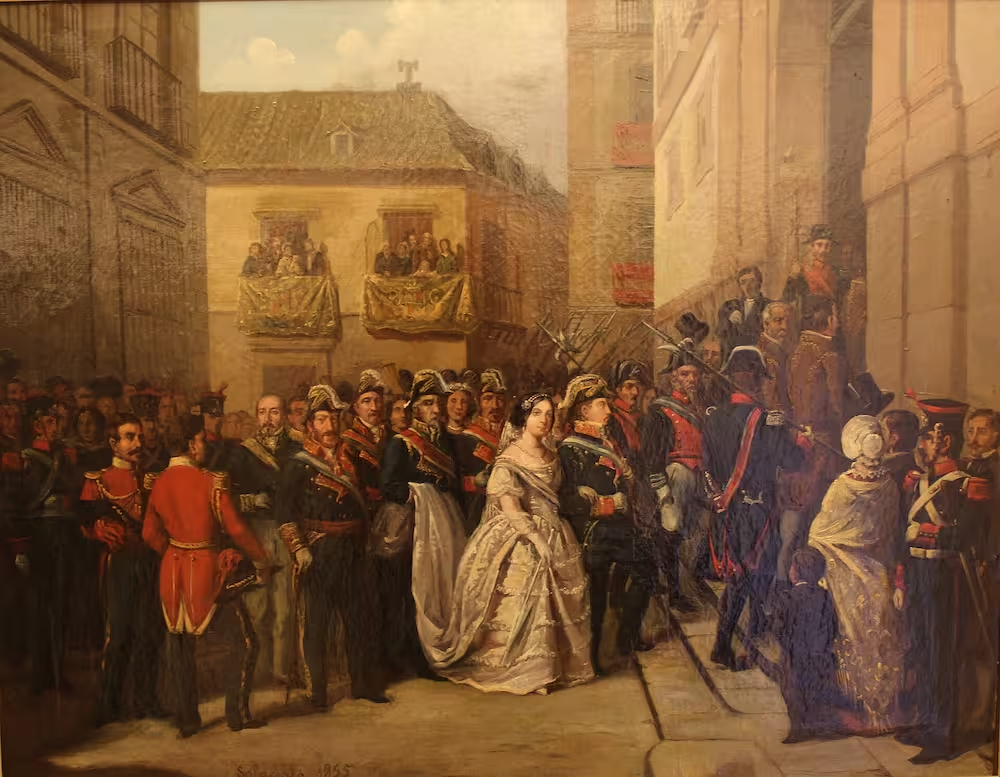
The years passed, one war came and went, and while the country was engulfed in another, the Constituent Courts of 1837 resolved to revive the proposal to create a diocesan seat in Madrid and to enshrine it in the Concordat of 1851 signed between Spain and the Holy See. However, various political factors — changes of government and social tensions — prevented it from being carried out. The prospect seemed to recede even further when, in 1868, the Madrid City Council decided to demolish the church of Santa María de la Almudena in order to widen the Calle Mayor as far as the Cuesta de la Vega and connect it with the Calle de Bailén. The demolition began on 27 October 1868 and concluded on 4 May of the following year. The image of the Virgin of the Almudena was transferred to the Monastery of the Blessed Sacrament. That monastery, founded in 1615 by Cristóbal Gómez de Sandoval y Rojas, would ultimately share the fate of the church of Santa María: it was demolished in the 1970s to make way for a block of flats.
María de las Mercedes
While the oldest church in Madrid fell to the wrecking ball, the Congregation of the Slaves of the Virgin of the Almudena, founded in 1640, applied to the Archbishop of Toledo for permission to build a new church in honour of the Virgin of the Almudena, in an effort to preserve both the veneration of the image and the popular devotion that this invocation had aroused among the people of Madrid for centuries. Thanks to the support of Queen María de las Mercedes, a fervent devotee of the Virgin of the Almudena, a plot of land next to the Royal Palace was obtained from the Patrimonio Nacional, between the Plaza de la Armería and the Cuesta de la Vega.
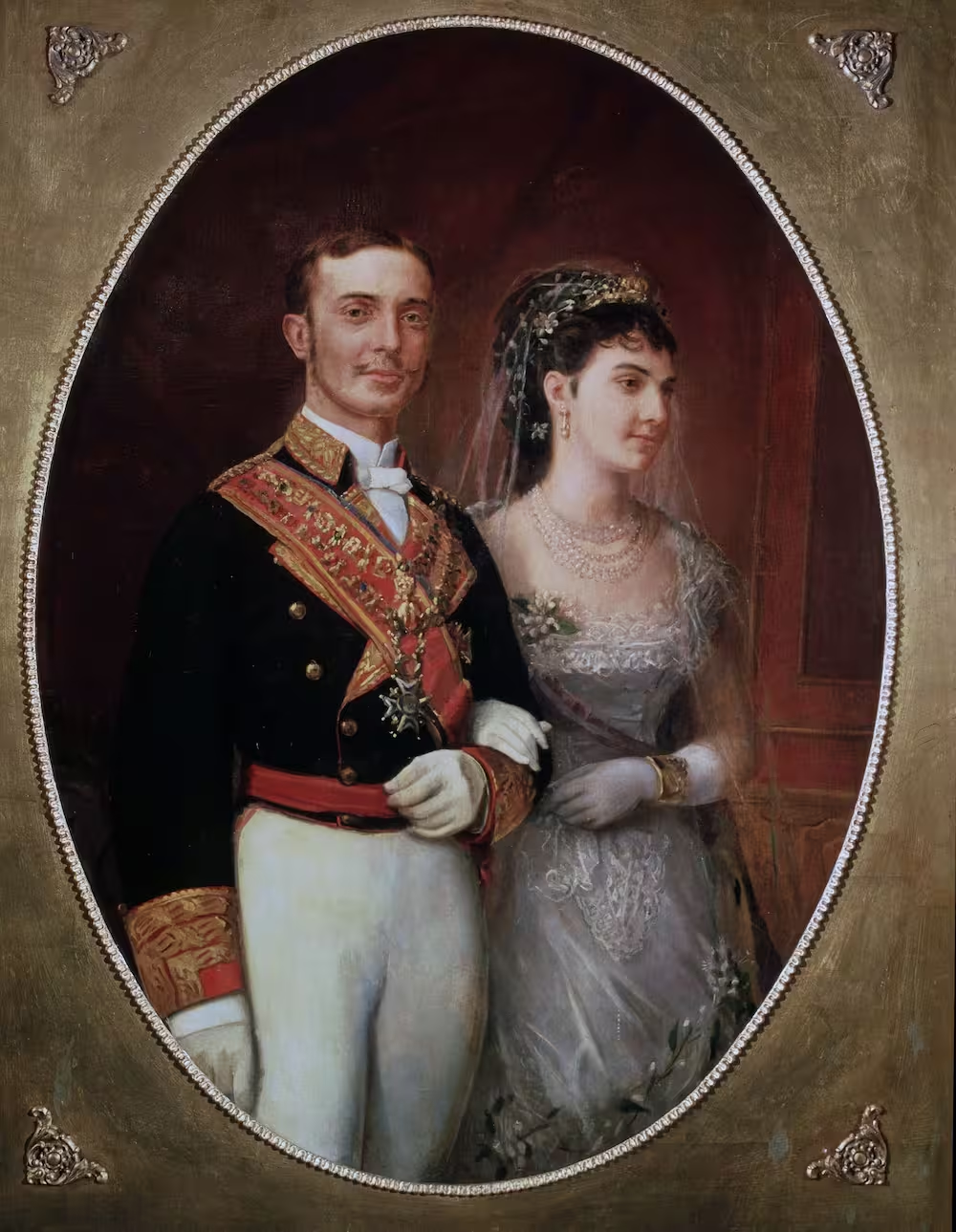
The queen would never see the new church, however, for she died suddenly on 26 June 1878. Having had no children, she could not be buried in the Royal Pantheon of the Monastery of San Lorenzo de El Escorial. Alfonso XII therefore arranged for her to be laid to rest in the new church of the Almudena, donating 125,000 reales toward the project. In late July 1878, the Marquis of Cubas was commissioned to design the church of Santa María la Real de la Almudena. The groundworks began on 14 July 1881, and, as mentioned above, on 4 April 1883, Alfonso XII, accompanied by his second wife, Queen María Cristina, presided over the ceremony to bless the foundation stone of the church.
The Diocese of Madrid-Alcalá
On 29 May 1885 the Diocese of Madrid-Alcalá was established as a suffragan see of the Archdiocese of Toledo. The papal bull formalising its creation, entitled Romani Pontifices Praedecessores, stipulated, among other provisions, that “when, with God’s favour, the building of the church of Santa María de la Almudena is completed, the episcopal throne shall be permanently established there as the cathedral church of the diocese.” In the meantime, until the completion of the Almudena Cathedral, the Collegiate Church of San Isidro was designated as the provisional cathedral of Madrid.
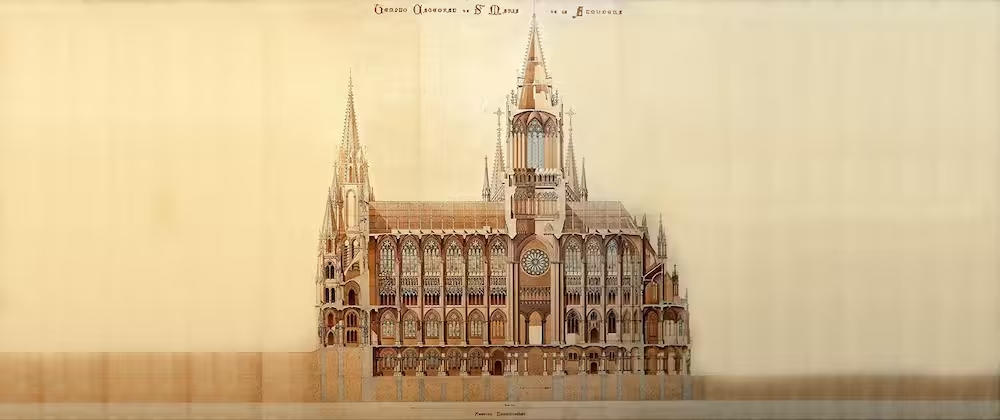
The selection of the church of Santa María de la Almudena as the future cathedral entailed a significant modification to the original design. The new project, once again entrusted to the architect Francisco de Cubas, was far more ambitious and on a grander scale, combining Romanesque, Gothic and Renaissance elements.
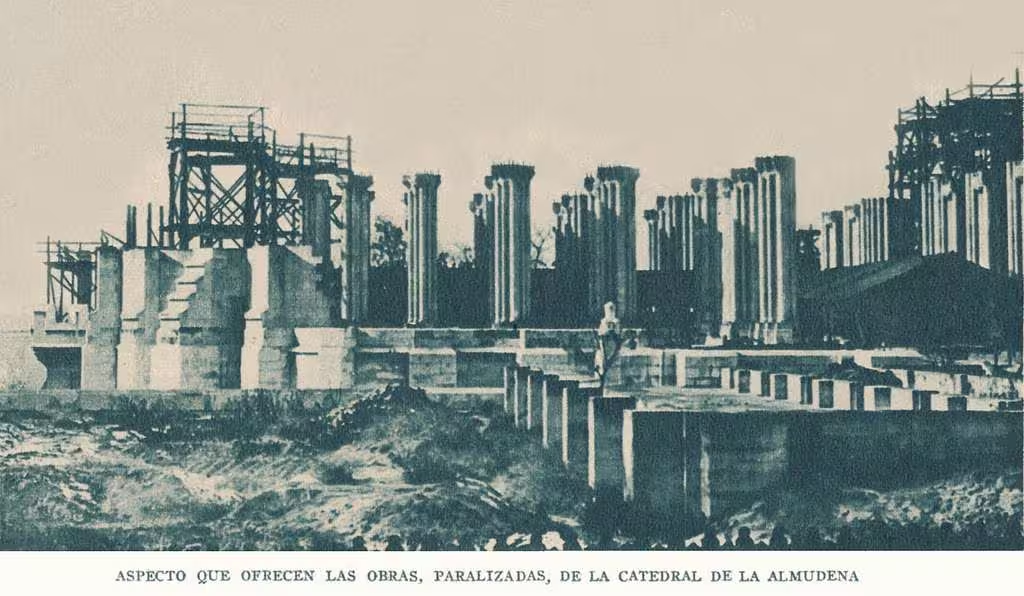
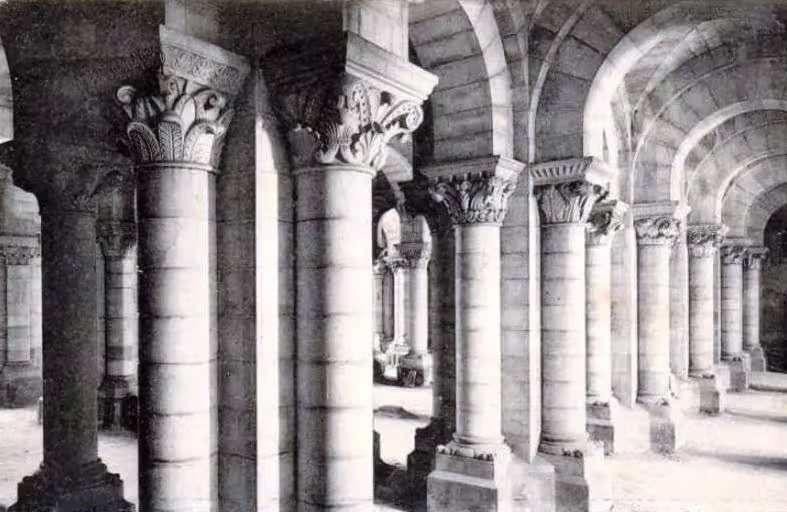
However, as had happened in the time of Philip IV, the works were once again halted by a combination of obstacles, chiefly lack of funding and the scant support of successive governments. As a result, construction of the cathedral ground to a halt, and the crypt, inaugurated in 1911, became the only place of worship available during those years.
A New Project
After the Civil War, construction of the Almudena Cathedral was in a very incomplete state. In 1944, the Marquis of Lozoya, Director General of Fine Arts, called a public competition to select a new, less costly design that would allow work to resume. The competition was won by the architects Fernando Chueca Goitia and Carlos Sidro, whose design was for a considerably smaller cathedral than the original — reducing the planned structure to just one third of what had originally been envisaged — which would allow the cathedral to be completed in a shorter time and at lower cost.
Work resumed in 1950, with the cloister completed in 1955 and the main façade in 1960, though decorative elements were still lacking. Lack of funds halted construction again in 1969. It was estimated that 1,000 million pesetas would be needed to finish the cathedral.
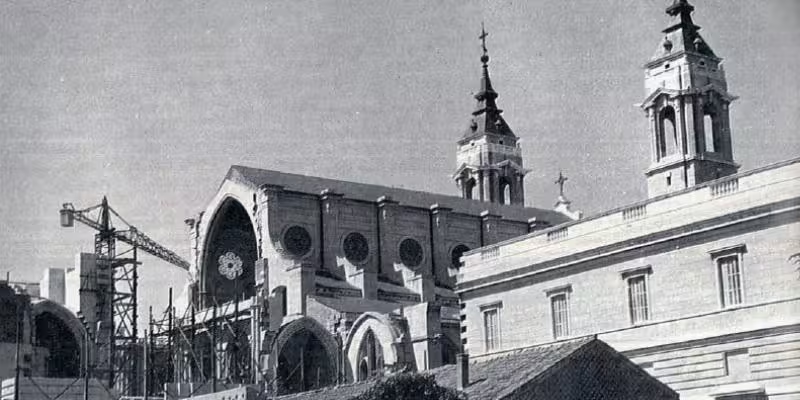
Despite these financial setbacks, on 25 March 1964, Pope Paul VI elevated the Diocese of Madrid-Alcalá to the rank of Archdiocese, separating it from the Archbishopric of Toledo and placing it in direct dependence on the Holy See.
Ángel Suquía and Felipe González
With the aim of raising the funds needed to complete the cathedral, in 1978 the Patronato para la Terminación, Conservación y Exaltación de la Catedral de Santa María de la Almudena (Board for the Completion, Conservation and Promotion of the Almudena Cathedral) was founded, with its offices in the Casa de la Panadería on the Plaza Mayor. It would be the new Bishop of Madrid-Alcalá, Ángel Suquía, appointed on 12 April 1983, who finally managed to mobilise the resources needed and secure the institutional and business support that would allow the works to be concluded.
The bishop approached the President of the Community of Madrid, Joaquín Leguina, and the Mayor of Madrid, Enrique Tierno Galván, requesting funds. Leguina replied: “I will put up the same money as the mayor.” “I said it with a little bad faith,” the veteran Socialist would recount years later with a laugh, recalling that “Once, while walking past the Royal Palace, Tierno had said to me: ‘But this business from the time of Alfonso XII of wanting to build a cathedral here, joining throne and altar… Let the ruins stand as they are — they look rather fine!’ So I thought: ‘This man is not going to give a penny.’ But no — I was completely wrong.” [5] Suquía, however, managed to win the mayor over by cleverly changing his approach. He showed him a drawing by Chueca depicting the panoramic view of the palace-cathedral ensemble and said: “Let us stop talking about the cathedral. This is the panoramic skyline of Madrid.” [6] The strategy worked and he secured the support he needed.
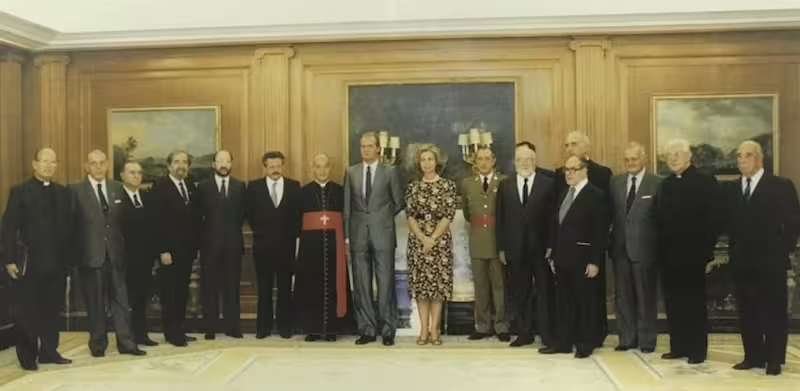
The funds provided by the Community of Madrid and the City Council were still insufficient to complete the works, however, which led the bishop to turn to the Prime Minister, Felipe González. Firmly committed to the project, González convened a dinner at La Moncloa with the heads of the country’s leading banks and major companies. During this gathering, he asked each of those present to contribute a specific sum to ensure the completion of the cathedral. All those in attendance pledged to meet their commitment in full. Years later, Archbishop Rouco Varela publicly acknowledged that “if anyone helped to ensure the Almudena Cathedral was finished, it was Felipe González.” [7] This initiative proved crucial in securing the resources needed to finally bring the work to completion.
Another fundamental source of income for completing the Almudena Cathedral was the Fundación de La Almudena, established in November 1984. This organisation brought together a range of bodies, including the Archbishopric of Madrid, Madrid City Council, the Autonomous Community, the Savings Bank, the Chamber of Commerce and the Press Association. The Foundation’s board donated 35 million pesetas toward the works. In addition, a highly successful public fundraising campaign raised nearly 100 million pesetas, reflecting the strong support and solidarity of ordinary citizens for this ambitious undertaking. Throughout this process, prominent figures from politics, the arts, theatre, intellectual life and sport lent their support, contributing not only financially but also through the media attention they brought to the cause.
The Consecration of the Cathedral: 15 June 1993
Thanks to the many contributions from companies, institutions and private individuals, the funds needed to complete the cathedral’s construction were duly raised. Work resumed on 14 October 1984 and, after nearly a decade of intensive effort, was declared finished in 1993.
In an act charged with emotion for the people of Madrid, on 10 June 1993 the image of their patron, Santa María de la Almudena, left the Collegiate Church of San Isidro, where she had been kept since 1954, to be transferred to her new home: the cathedral that bears her name. Five days later, on 15 June 1993, in a square packed with thousands of people who had come to witness that historic moment, Pope John Paul II officially consecrated the Almudena Cathedral, a landmark event in the history of the city and of the Church in Spain.
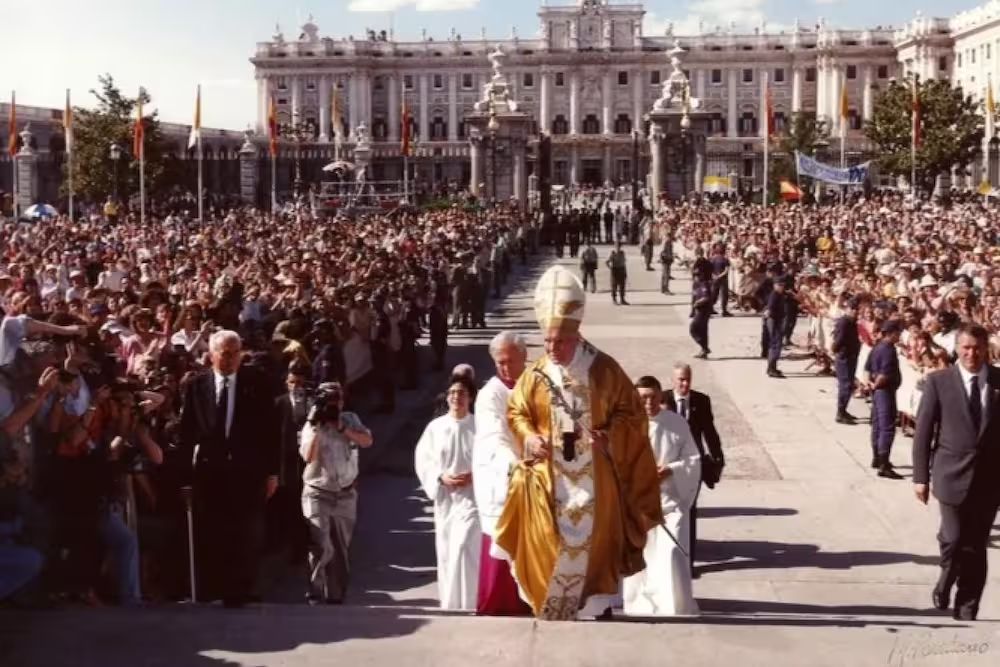
Although its architectural style — combining neoclassical, Gothic and modern elements — does not convince everyone and has generated debate about its suitability within its surroundings and its aesthetic coherence, the Almudena Cathedral has become one of the principal architectural symbols of Madrid. It represents the collective effort and perseverance that made it possible to bring to fruition one of the most ambitious projects in the history of the city’s religious heritage. It is the result of the dedication of many generations and the effort and determination of all those who worked to ensure that Madrid finally had a cathedral of its own.
Notes
- León Pinelo, Anales de Madrid (from the year 447 to 1658).
- Archive of the Town of Madrid, ASA 2-362-54, cited in Virginia Tovar Martín, “Aspectos prácticos y teóricos de un proyecto de catedral de Madrid”, in La Almudena y Madrid, Fundación Villa y Corte, Madrid, 1993.
- Archive of the Town of Madrid, ASA 2-401-7, cited in Virginia Tovar Martín, “Aspectos prácticos y teóricos de un proyecto de catedral de Madrid”, in La Almudena y Madrid, Fundación Villa y Corte, Madrid, 1993.
- Cartas de Andrés de Almansa y Mendoza: Novedades de Esta Corte y Avisos Recibidos de Otras Partes, 1621–1626, cited in Ricardo Sepúlveda, “Santa María de la Almudena”.
- Ricardo Benjumea, “Y Madrid tuvo por fin su catedral”, Alfa y Omega, 28 June 2018.
- Ricardo Benjumea, “Y Madrid tuvo por fin su catedral”, Alfa y Omega, 28 June 2018.
- José Beltrán, “Suquía y Felipe González, el tándem que dio el empujón definitivo a La Almudena”, Vida nueva digital, 21 June 2018.
Header photograph
View of the cathedral from the north-east. By Fernando — own work, CC BY-SA 4.0, https://commons.wikimedia.org/w/index.php?curid=114109784
Bibliography
In addition to the sources cited in the notes, the following were consulted in the preparation of this article:
- Website of the Archdiocese of Madrid.
- Catholic.net website.
- García Hidalgo Villena, Cipriano. Madrid sin catedral. Breve historia de un desencuentro. Investigart.